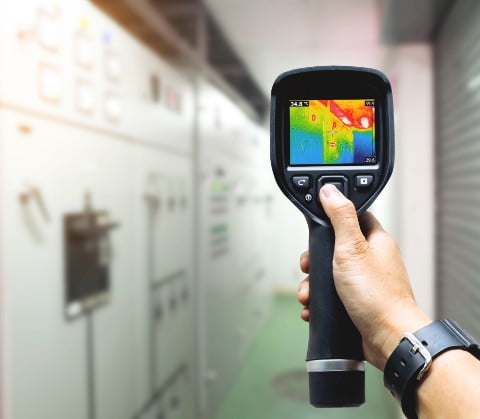
Infrared Thermography FAQs
Is thermal imaging included with a full home inspection?
Yes. We include thermal imaging at no additional cost with every full home inspection. We use it as a supplemental tool when conditions and accessibility allow.
What can an infrared camera help identify?
It may reveal temperature patterns associated with possible moisture intrusion, missing or uneven insulation, air leakage, overheating electrical components and HVAC performance concerns. Any unusual pattern must be interpreted alongside the visible inspection and other testing tools.
Can thermal imaging find an active plumbing leak?
It may show a temperature pattern associated with moisture, but it cannot confirm the source or determine whether a leak is active by itself. When accessible, we compare the image with visible conditions and moisture-meter readings.
Can an infrared camera detect mold?
No. Thermal imaging cannot identify or confirm mold. A physical or air sample must be collected and analyzed by a laboratory to confirm mold.
Can the camera see through walls or ceilings?
No. An infrared camera measures surface temperatures. Those patterns can provide clues about conditions behind a surface, but the camera does not create an image through the material.
Will thermal imaging locate every hidden problem?
No. A detectable temperature difference must exist at the time of inspection. Weather, indoor temperature, recent water use, insulation, finishes and other conditions can limit what appears during the scan.
Are thermal images included in the inspection report?
Relevant thermal images are included when they help document or explain a finding. We do not fill the report with routine images that do not show a meaningful concern.
Does thermal imaging replace a standard home inspection?
No. It supplements the visual inspection. We still evaluate the home’s accessible systems and components using standard inspection methods and other appropriate tools.