
What a Bradenton Home Inspection Found in a Brand-New 2026 Home
A new home can look perfect during the final walkthrough and still have defects hidden behind the finishes. During a recent Bradenton home inspection, Florida Property Group inspected a single-family home built in 2026. Despite being brand new, the property had several concerns that deserved attention before the buyer moved forward.
The findings included an active ceiling leak, water inside a light fixture, an HVAC supply register covered by drywall, condensation at poorly sealed ductwork, suspected fungal growth, plumbing and electrical concerns, displaced attic insulation, standing water on the lot, and additional finish defects.
This is exactly why an independent Bradenton home inspection matters—even when the builder says the home is complete.
What We Found During This Bradenton Home Inspection
The inspection covered the roof, exterior, grounds, garage, heating and cooling equipment, electrical system, plumbing, interior rooms, bathrooms, kitchen, laundry, attic, foundation, environmental observations, pool and spa components.
These were not hypothetical examples or stock photographs. Every image below comes directly from the actual inspection report. The sample address and client information were anonymized for privacy.
1. An Active Ceiling Leak Detected With Thermal Imaging
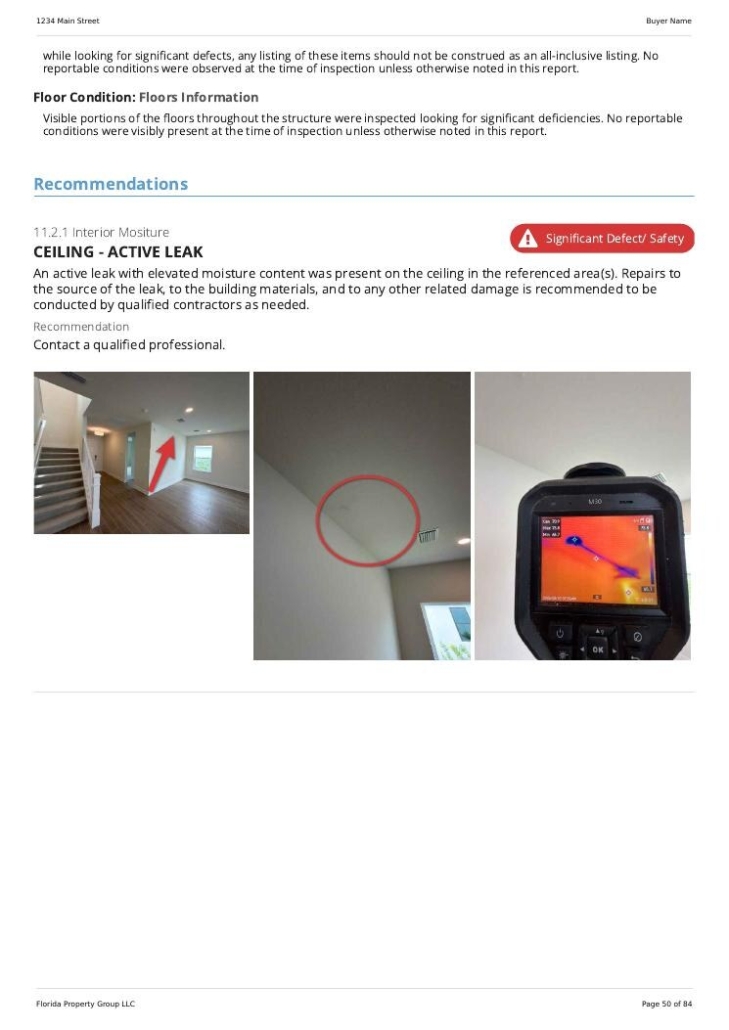
One of the most important discoveries was an active leak at the downstairs ceiling. The inspector operated plumbing fixtures in the upstairs guest bathroom, then observed the area below. A thermal camera showed an abnormal cool pattern, and a moisture meter confirmed elevated moisture.
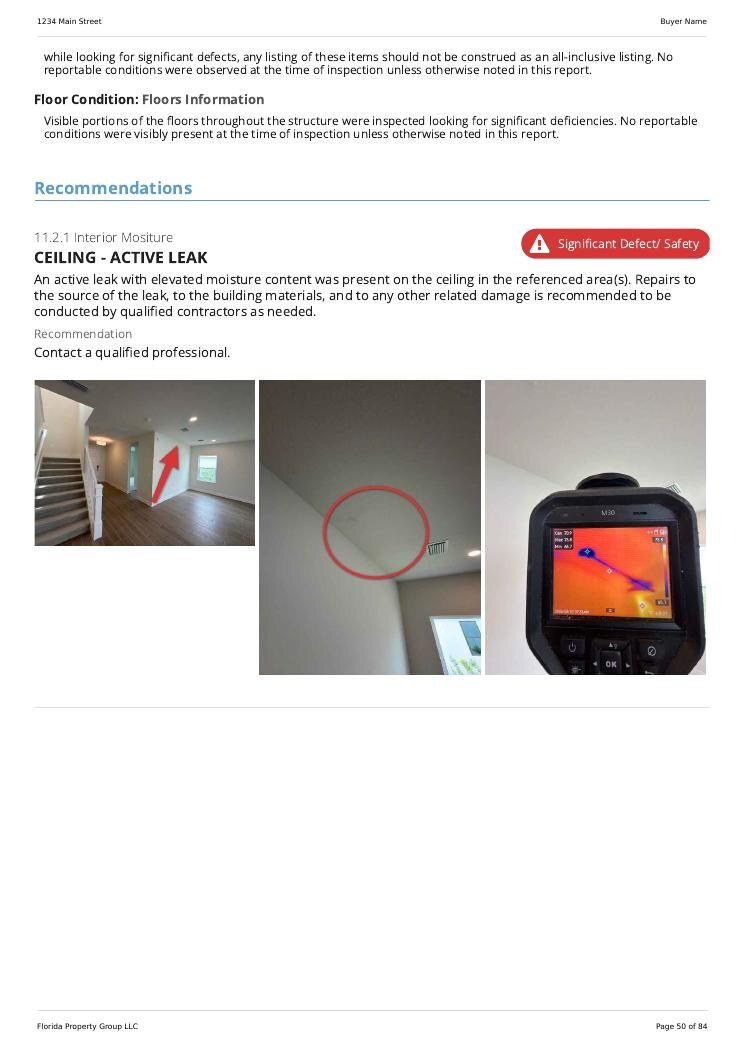
Without thermal imaging and moisture testing, this condition could have been missed during a quick visual walkthrough. Left unresolved, an active leak can damage drywall, insulation, framing and nearby electrical components. The report recommended evaluation and repair by qualified contractors.
2. Water Inside a Light Fixture
Water was also present inside a ceiling light fixture. Moisture and energized electrical components are a dangerous combination because they can create a shock hazard and damage the fixture or wiring.
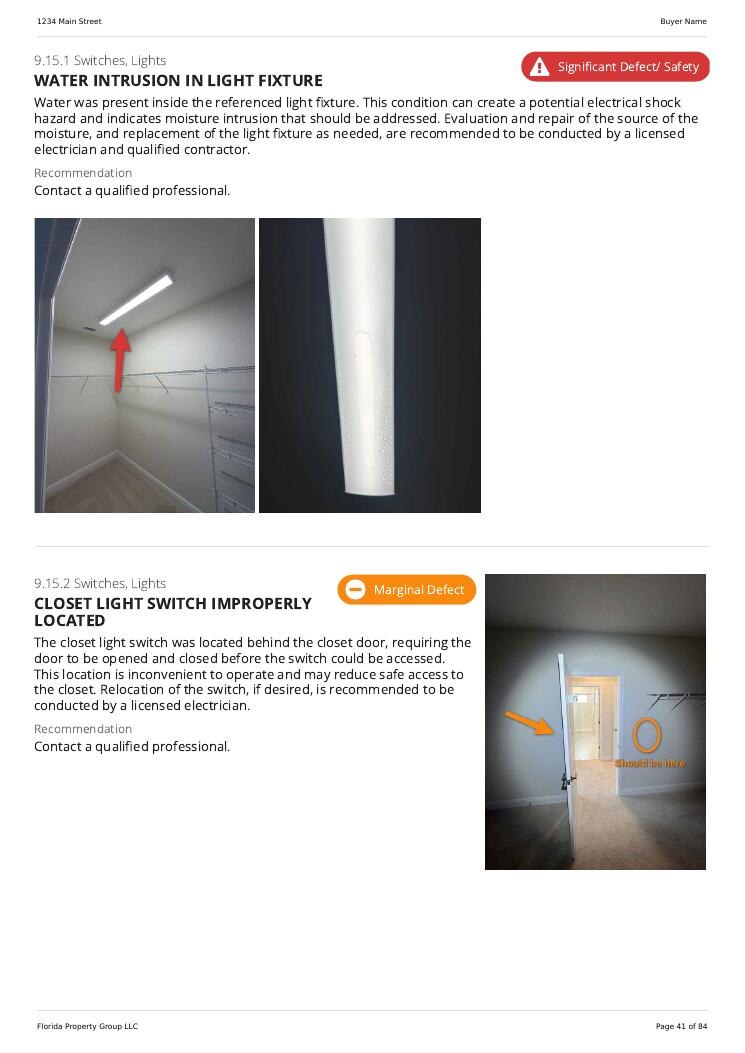
The report recommended locating and repairing the moisture source, replacing damaged materials as needed, and having a licensed electrician evaluate the fixture and related wiring.
3. An HVAC Supply Register Hidden Behind Drywall
Thermal imaging also helped identify an air-supply opening that appeared to have been covered during drywall installation. The temperature pattern showed conditioned air reaching the ceiling even though no register was visible.
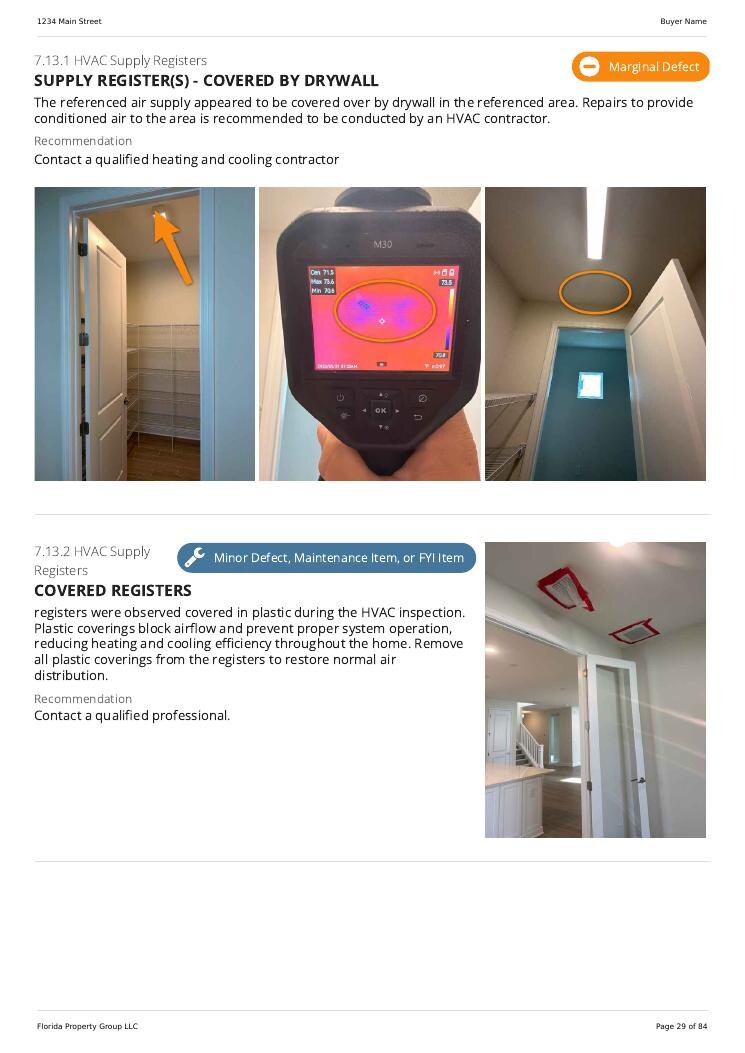
A buried supply register can restrict airflow, reduce comfort and waste energy. It may also point to a missed construction step that should be corrected by the builder or an HVAC contractor.
4. Condensation and Poorly Sealed Ductwork
In the attic, the inspection found condensation at duct joints where tape and seals were inadequate. Moisture buildup around ductwork can contribute to air leakage, reduced system efficiency, damaged insulation and conditions favorable to fungal growth.
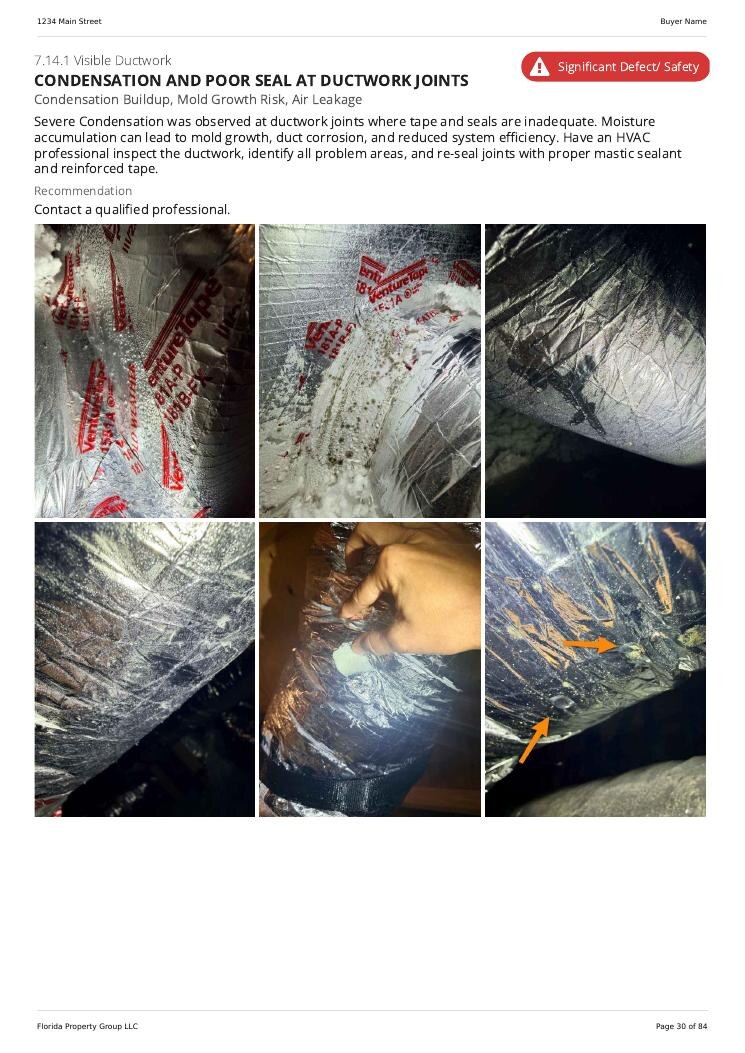
The report recommended that an HVAC professional inspect the duct system, identify problem areas and properly reseal the joints.
5. Suspected Fungal Growth and Elevated Moisture
Suspected fungal growth was observed on several interior surfaces, including areas near the wet light fixture. Moisture meter readings were elevated at the time of inspection.
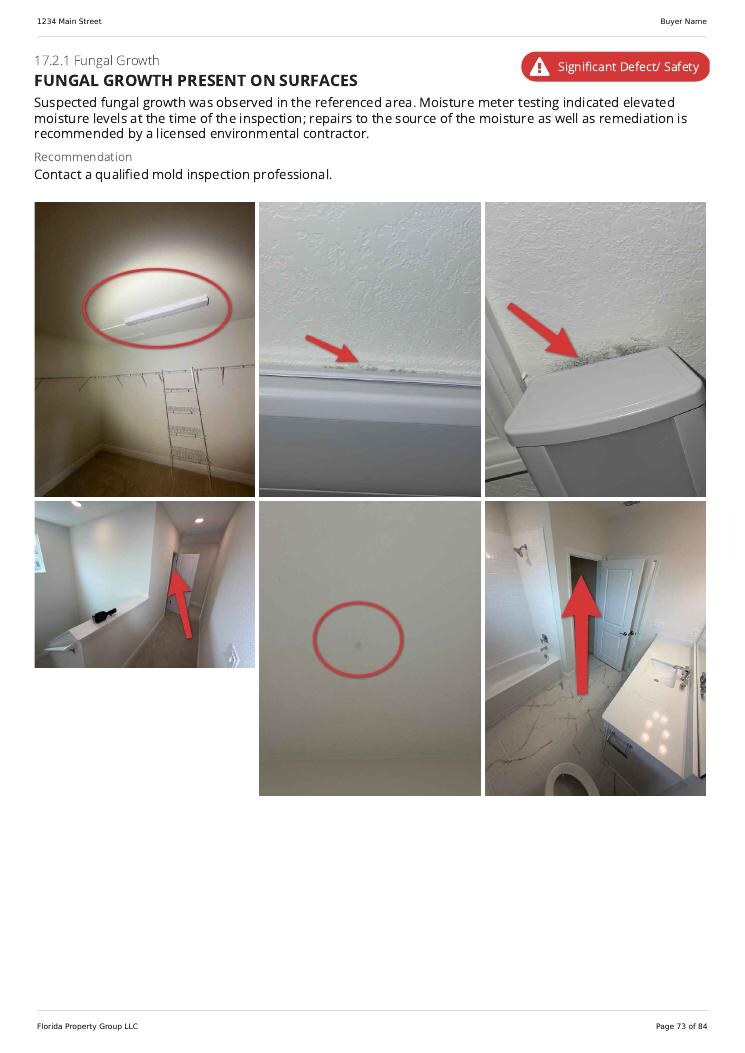
A home inspector can document visible growth and moisture conditions, but appearance alone cannot confirm whether a substance is mold. Physical or air samples must be collected and analyzed by an accredited laboratory for confirmation. The immediate priority is to identify and repair the moisture source.
Other Concerns Documented in the Report
The 84-page report also documented several additional defects and maintenance concerns:
- Bowing fiber-cement siding panels
- Damaged exterior-door weatherstripping and scratched glass
- Standing water on the property after recent rain
- A dirty HVAC filter and covered supply registers
- An obstruction at the water-heater temperature and pressure relief discharge pipe
- Damaged electrical wire jacket and a loose floor receptacle
- A missing air-admittance valve below a bathroom sink
- Moisture at the dryer exhaust vent
- Displaced attic insulation
- Mineral buildup on the pool salt chlorinator cell
Not every finding is a major defect by itself. The value of the inspection is seeing the complete picture before closing, while there is still time to ask questions, obtain specialist evaluations and request appropriate corrections.
Why New-Construction Homes Still Need Independent Inspections
New homes are built by many crews working on tight schedules. Even reputable builders can have missed connections, covered components, incomplete seals or damage that occurs late in construction. Municipal code inspections serve an important purpose, but they are not a substitute for a detailed buyer-focused inspection.
An independent inspection gives the buyer a photo-rich record of the home’s condition. It can also help organize conversations with the builder before closing and create a useful baseline for a future 11-month warranty inspection.
See the Full Sample Home Inspection Report
You can review the complete online report—including every system inspected, photographs, defect classifications and recommendations—here:
View the Full Sample Inspection Report
Schedule a Bradenton Home Inspection
Florida Property Group provides buyer, new-construction and warranty inspections throughout Bradenton, Lakewood Ranch, Parrish, Palmetto, Sarasota and surrounding communities. Our inspections include thermal imaging, clear explanations and a detailed photo-rich report delivered the same day.
If you are buying a home in the Bradenton area, schedule your inspection online or call/text (941) 900-3342.


Leave a Reply
Want to join the discussion?Feel free to contribute!