Florida insurance companies often request a 4-point inspection when a Sarasota home reaches a certain age or when a policy is being written or renewed. The report focuses on four major systems: roof, electrical, plumbing and HVAC. It is limited in scope and should not be confused with a full home inspection.

Florida Property Group serves Bradenton, Sarasota, Lakewood Ranch and surrounding Southwest Florida communities. Our inspections are designed to give buyers and homeowners clear, unbiased information—not a rushed checklist or an alarmist list of defects. We provide detailed same-day reports and remain available for questions after the inspection.

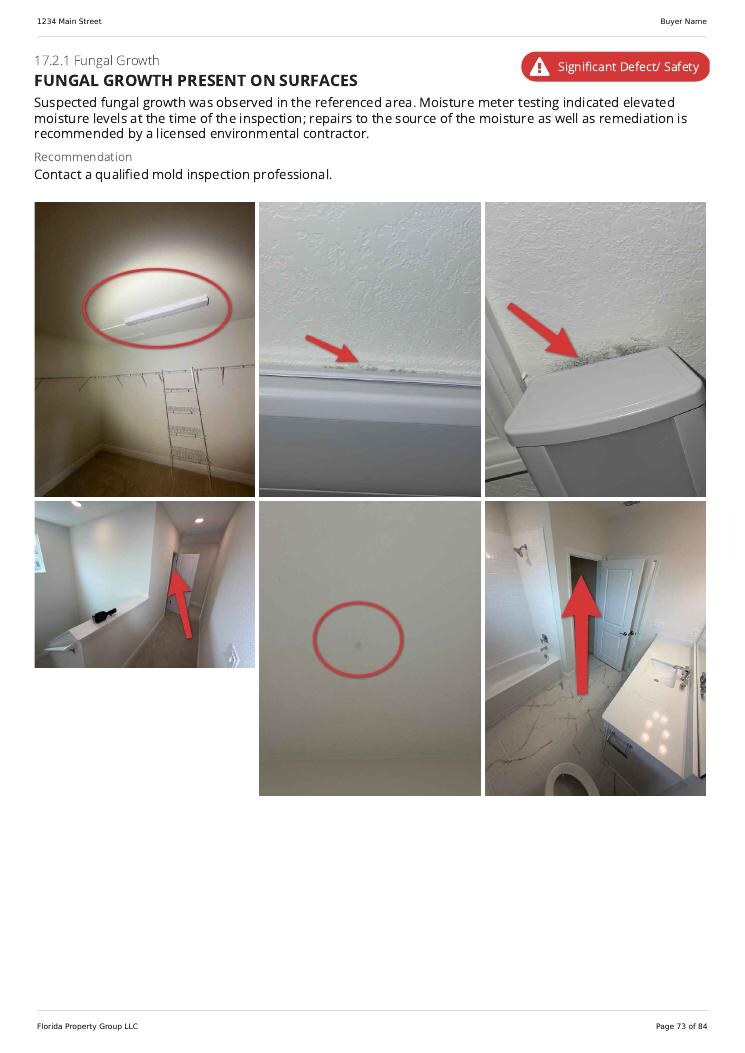
Florida Property Group inspector explaining an electrical panel during a 4-point inspection Sarasota
A Florida Property Group inspector explains an electrical panel and the observed conditions to homebuyers.

Why This Matters in Southwest Florida

Sarasota’s housing stock ranges from newer planned communities to older coastal and inland neighborhoods. Insurance requirements can change based on the carrier, building age and system updates. A clean-looking home may still need documentation of roof age, panel equipment, plumbing materials and permanent heating before a policy can be written.

Local climate and construction practices influence what an inspector may observe, but location alone never proves that a defect exists. Conclusions should be based on visible evidence at the individual property, relevant documentation and the operating conditions present during the appointment.

Roof

The form documents the roof covering, approximate age, visible condition, remaining useful life and signs of active leakage. Permit records and invoices can help establish replacement dates.

Useful documentation identifies the exact location, the observable evidence and the appropriate next step. Photographs provide context, but the written explanation is what helps the client understand why the condition matters.

Electrical

The inspector records panel information, wiring types and observable hazards such as damaged components, improper overcurrent protection or certain outdated equipment. Accessible branch wiring is evaluated visually.

Conditions are not always consistent throughout a property. The inspector evaluates representative and accessible areas, notes limitations and avoids assuming that one visible location proves the condition of every concealed area.

Plumbing

Visible supply and drain materials, the water heater and evidence of leakage are documented. The inspection cannot determine the condition of concealed pipes or underground drainage.

Normal operating controls and non-invasive methods are used whenever conditions allow. If a definitive answer requires dismantling, engineering calculations or specialized instruments outside the inspection scope, the report should recommend the appropriate professional.

HVAC

The heating and cooling equipment, approximate age and operating condition are recorded. The system generally must provide a permanent source of heating to satisfy insurer requirements.

The goal is proportionate guidance. Significant safety or active-damage concerns should be clear, while ordinary maintenance should not be presented as a crisis. That distinction helps clients direct their time and contractor estimates effectively.

Full Inspection Versus 4-Point

A 4-point report is designed for insurance underwriting, not a buyer’s complete understanding of the property. Buyers should choose a full inspection and add the insurance reports when needed.

A report is most valuable when it supports action. Clients should preserve documentation, ask questions they do not understand and obtain specialist opinions before contractual or warranty deadlines when the finding could affect the decision.

How to Prepare

Good preparation improves access and reduces avoidable limitations. Before the appointment, confirm the requested scope, gather available records and make normally accessible equipment available without creating an unsafe condition. The following steps are especially useful for this service:

  • Confirm the exact form and deadline with the agent
  • Collect roof permits, invoices and HVAC records
  • Clear access to panels, water heater and air handler
  • Repair known active leaks before the appointment
  • Keep licensed-contractor documentation for completed corrections

Do not make last-minute adjustments solely to produce a preferred inspection result. Representative conditions, honest repair history and complete documentation are more valuable than a temporary appearance that cannot be verified.

How to Use the Findings

If the carrier identifies an underwriting concern, request the requirement in writing. That makes it easier to determine whether a repair, specialist letter, permit record or reinspection is needed. After corrections, photographs and invoices should identify exactly what changed rather than relying on a verbal statement.

The inspector explains observed conditions and recommends appropriate next steps, but contractors establish repair methods and prices. When a finding could materially affect the transaction, insurance, warranty coverage or occupant safety, obtain the specialist’s written opinion within the applicable deadline.

Important Limitations

A 4-point inspection is a limited insurance report, not a substitute for a full buyer inspection. It does not provide exhaustive testing of every component or determine whether an insurer must issue coverage. Concealed plumbing, wiring and roof conditions cannot be evaluated visually.

No inspection can eliminate every risk. The service provides a professional snapshot of accessible conditions on the inspection date. Future performance, concealed defects and intermittent problems remain possible, which is why disclosures, maintenance records and qualified specialist evaluations can be important additions to the inspection.

Frequently Asked Questions

Who decides whether I need one?

Your insurance agent or carrier determines the required documentation.

Can repairs be made after the inspection?

Yes. Corrected items can often be reinspected and updated documentation provided.

Does it guarantee insurance approval?

No. The insurer makes all underwriting decisions.

Schedule Your Inspection

Every home has a story. Florida Property Group helps you understand it so you can move forward with confidence. Learn more about 4-point inspection Sarasota, review what our home inspections include, or schedule your inspection online. Questions? Call (941) 900-3342 or email hello@flpg.net.

Buying a home in Bradenton puts buyers in one of the most distinctive real estate markets on Florida’s Gulf Coast, and one of the most consequential decisions in that market is understanding what makes properties here different from what most buyers have encountered elsewhere. Bradenton and the surrounding Manatee County communities attract buyers from across the country who often arrive with assumptions shaped by markets that don’t reflect Florida’s specific combination of climate exposure, insurance complexity, and construction characteristics. The buyers who navigate this market most confidently are the ones who understand those differences before they make an offer.

What Buying a Home in Bradenton Means for the Inspection Process

The home inspection is where buyers purchasing in Bradenton and the surrounding area get their most complete and unbiased picture of what a property actually is. Florida’s subtropical climate creates inspection findings that don’t exist in most other markets. The combination of year-round heat and humidity, salt air exposure in coastal and near-coastal communities, seasonal storm events, and construction methods specific to the region means that experienced local inspectors are looking for things that generalist inspectors from other markets may not prioritize.

Roof condition is the most consequential inspection finding when buying a home in Bradenton, because Florida’s insurance market has made roof age and condition a determining factor in whether a property is insurable at all. A buyer who purchases a home with an aging roof without understanding the insurance implications may discover they can’t obtain coverage, or can only obtain it at a premium that significantly changes the economics of the purchase. A thorough home inspection documenting the roof’s age, material, and condition gives the buyer that information while they still have leverage.

Moisture intrusion is the other inspection concern Bradenton’s climate makes particularly relevant. Properties that have experienced storm water intrusion, plumbing leaks, or chronic humidity issues may harbor mold in wall cavities, under flooring, or in the attic, invisible in a casual walkthrough. Thermal imaging detects the temperature differentials indicating moisture in concealed locations, which is why it’s included in a thorough Bradenton area home inspection rather than offered as an optional add-on.

The Insurance Landscape Buyers Encounter When Buying a Home in Bradenton

Florida’s homeowner’s insurance market has undergone significant changes in recent years, and buyers purchasing in Bradenton need to factor insurance into their purchase decision earlier in the process than they might in other states. The four-point inspection, documenting the condition of the roof, electrical system, plumbing, and HVAC, is required by most Florida insurers for homes over fifteen years old. Discovering a four-point issue at closing after the inspection contingency has closed is one of the more costly surprises a buyer can encounter. Scheduling the four-point inspection alongside the standard home inspection ensures insurance-relevant conditions are identified during due diligence.

Wind mitigation inspections document the home’s hurricane-resistance features and are used by insurers to calculate premium discounts that can be substantial in Bradenton and Manatee County. New buyers from other markets are often surprised by how meaningfully a wind mitigation report can affect the annual insurance cost.

What Buyers From Out of State Should Know

Concrete block construction, the dominant residential building method in Florida, behaves differently than wood frame in terms of moisture management, pest resistance, and maintenance. Stucco exteriors, which clad most Bradenton area homes, are durable but capable of concealing moisture intrusion behind a surface that looks fine from the outside. The presence of a pool adds safety, liability, and maintenance considerations that buyers from non-pool markets often underestimate until they own one.

Frequently Asked Questions

What’s the most important thing to inspect when buying a home in Bradenton?
Roof condition is consistently the most consequential finding, both because of Florida’s weather exposure and because of insurance implications that directly affect the economics of the purchase. Beyond the roof, moisture intrusion assessment through thermal imaging, HVAC condition given Florida’s year-round operational demands, and electrical panel evaluation for older properties round out the highest-priority inspection areas in this specific market.

Do I need a home inspection if I’m buying a new construction home?
Yes, and this is one of the situations where buyers most commonly and mistakenly believe they don’t. New construction in Bradenton and Manatee County passes through a series of code inspections during the build process, but those inspections are not the same as a comprehensive third-party home inspection performed for the buyer’s benefit. New construction inspections regularly identify incomplete work, installation errors, and conditions that passed code but represent maintenance concerns the buyer should understand before taking possession.

How does living near the coast affect what to look for when buying a home in Bradenton?
Salt air accelerates corrosion on metal components, HVAC equipment, fasteners, flashing, and fixtures, at a rate that inland properties don’t experience. Properties within a mile or two of the water are in the most affected zone, but the salt air influence extends further in high-wind events. An experienced local inspector assesses corrosion on the HVAC condenser coils, roof flashing, and exterior metal components specifically with coastal exposure in mind, which is one of the reasons local experience matters as much as it does in this market.

How do I find a qualified home inspector when buying a home in Bradenton?
Look for a Florida-licensed inspector with documented local experience, not just general inspection credentials. InterNACHI certification, RASM membership, and a track record of inspections specifically in Manatee and Sarasota County indicate an inspector who understands this market’s specific conditions. Florida Property Group is licensed, InterNACHI certified, and completes over 1,500 inspections annually in the Bradenton, Sarasota, and Lakewood Ranch area.

The local inspectors at Florida Property Group are licensed Florida inspectors with deep experience in the Bradenton, Sarasota, and Lakewood Ranch markets; they know what this area’s homes look like from the inside, what’s typical, what’s concerning, and what a buyer needs to understand before they close. Schedule your inspection today!

Wind mitigation inspections are common in Bradenton because insurers use the documented construction features to evaluate how a home may perform during high-wind conditions. The inspection does not pass or fail the house, and savings are not guaranteed, but qualifying features may help reduce the wind portion of an insurance premium.

Florida Property Group serves Bradenton, Sarasota, Lakewood Ranch and surrounding Southwest Florida communities. Our inspections are designed to give buyers and homeowners clear, unbiased information—not a rushed checklist or an alarmist list of defects. We provide detailed same-day reports and remain available for questions after the inspection.

Florida Property Group inspector checking plumbing during a wind mitigation inspection Bradenton
A Florida Property Group inspector evaluates accessible plumbing components beneath a kitchen sink.

Why This Matters in Southwest Florida

Bradenton homes include many roof shapes, construction ages and retrofit histories. Two houses on the same street can receive different wind-mitigation classifications because credits are based on the weakest documented feature, not the overall appearance of the home. Permit records and product documentation often matter as much as what can be seen during the appointment.

Local climate and construction practices influence what an inspector may observe, but location alone never proves that a defect exists. Conclusions should be based on visible evidence at the individual property, relevant documentation and the operating conditions present during the appointment.

Roof Covering Documentation

The inspector records the roof-covering type and available evidence of installation or permit dates. Documentation can be important because visual appearance alone may not establish eligibility for a credit.

Useful documentation identifies the exact location, the observable evidence and the appropriate next step. Photographs provide context, but the written explanation is what helps the client understand why the condition matters.

Roof Deck Attachment

Accessible attic areas may allow the inspector to identify the fastener type and spacing used to secure the roof decking. This feature influences how the roof deck is classified on the state form.

Conditions are not always consistent throughout a property. The inspector evaluates representative and accessible areas, notes limitations and avoids assuming that one visible location proves the condition of every concealed area.

Roof-to-Wall Connections

Clips, single wraps and double wraps are different connection types. The inspector documents the weakest connection observed where the framing is accessible rather than assuming every connection is identical.

Normal operating controls and non-invasive methods are used whenever conditions allow. If a definitive answer requires dismantling, engineering calculations or specialized instruments outside the inspection scope, the report should recommend the appropriate professional.

Roof Geometry

A hip roof may qualify when it meets the definition used on the current form. Small non-hip sections can affect classification, so measurements and the overall roof configuration matter.

The goal is proportionate guidance. Significant safety or active-damage concerns should be clear, while ordinary maintenance should not be presented as a crisis. That distinction helps clients direct their time and contractor estimates effectively.

Opening Protection

Windows, exterior doors and garage doors require acceptable product documentation or markings to receive opening-protection credit. Shutters alone do not automatically prove that every opening qualifies.

A report is most valuable when it supports action. Clients should preserve documentation, ask questions they do not understand and obtain specialist opinions before contractual or warranty deadlines when the finding could affect the decision.

How to Prepare

Good preparation improves access and reduces avoidable limitations. Before the appointment, confirm the requested scope, gather available records and make normally accessible equipment available without creating an unsafe condition. The following steps are especially useful for this service:

  • Ask the insurance agent which form is required
  • Gather roof permits and paid replacement invoices
  • Locate shutter labels and product-approval documents
  • Make the attic opening accessible before arrival
  • Confirm all exterior doors and garage doors are accessible

Do not make last-minute adjustments solely to produce a preferred inspection result. Representative conditions, honest repair history and complete documentation are more valuable than a temporary appearance that cannot be verified.

How to Use the Findings

Review the completed form with the photographs before sending it to the carrier. Verify the property information and provide the form exactly as completed; the inspector should not alter observations to obtain a preferred credit. If documents are missing, ask the carrier what evidence would be acceptable before purchasing products or arranging work.

The inspector explains observed conditions and recommends appropriate next steps, but contractors establish repair methods and prices. When a finding could materially affect the transaction, insurance, warranty coverage or occupant safety, obtain the specialist’s written opinion within the applicable deadline.

Important Limitations

A wind mitigation inspection is not a structural evaluation or a promise that a home will resist hurricane damage. It also cannot guarantee an insurance discount. The inspector documents visible features and acceptable supporting evidence; the insurance company applies its own underwriting rules and determines the premium.

No inspection can eliminate every risk. The service provides a professional snapshot of accessible conditions on the inspection date. Future performance, concealed defects and intermittent problems remain possible, which is why disclosures, maintenance records and qualified specialist evaluations can be important additions to the inspection.

Frequently Asked Questions

How long does it take?

Most wind mitigation inspections are relatively brief, although attic access and home configuration affect timing.

Does the form expire?

Insurers commonly request updated documentation after a period of time or after major changes, so confirm requirements with your carrier.

Will I receive a discount?

Only the insurance company can determine eligibility and premium savings.

Schedule Your Inspection

Every home has a story. Florida Property Group helps you understand it so you can move forward with confidence. Learn more about wind mitigation inspection Bradenton, review what our home inspections include, or schedule your inspection online. Questions? Call (941) 900-3342 or email hello@flpg.net.

A newly built home may look finished during the final walkthrough, but it is still the product of many trades working on a deadline. An independent new construction inspection in Lakewood Ranch gives buyers a clearer picture of the home before closing and while the builder can still address documented concerns.

Florida Property Group serves Bradenton, Sarasota, Lakewood Ranch and surrounding Southwest Florida communities. Our inspections are designed to give buyers and homeowners clear, unbiased information—not a rushed checklist or an alarmist list of defects. We provide detailed same-day reports and remain available for questions after the inspection.

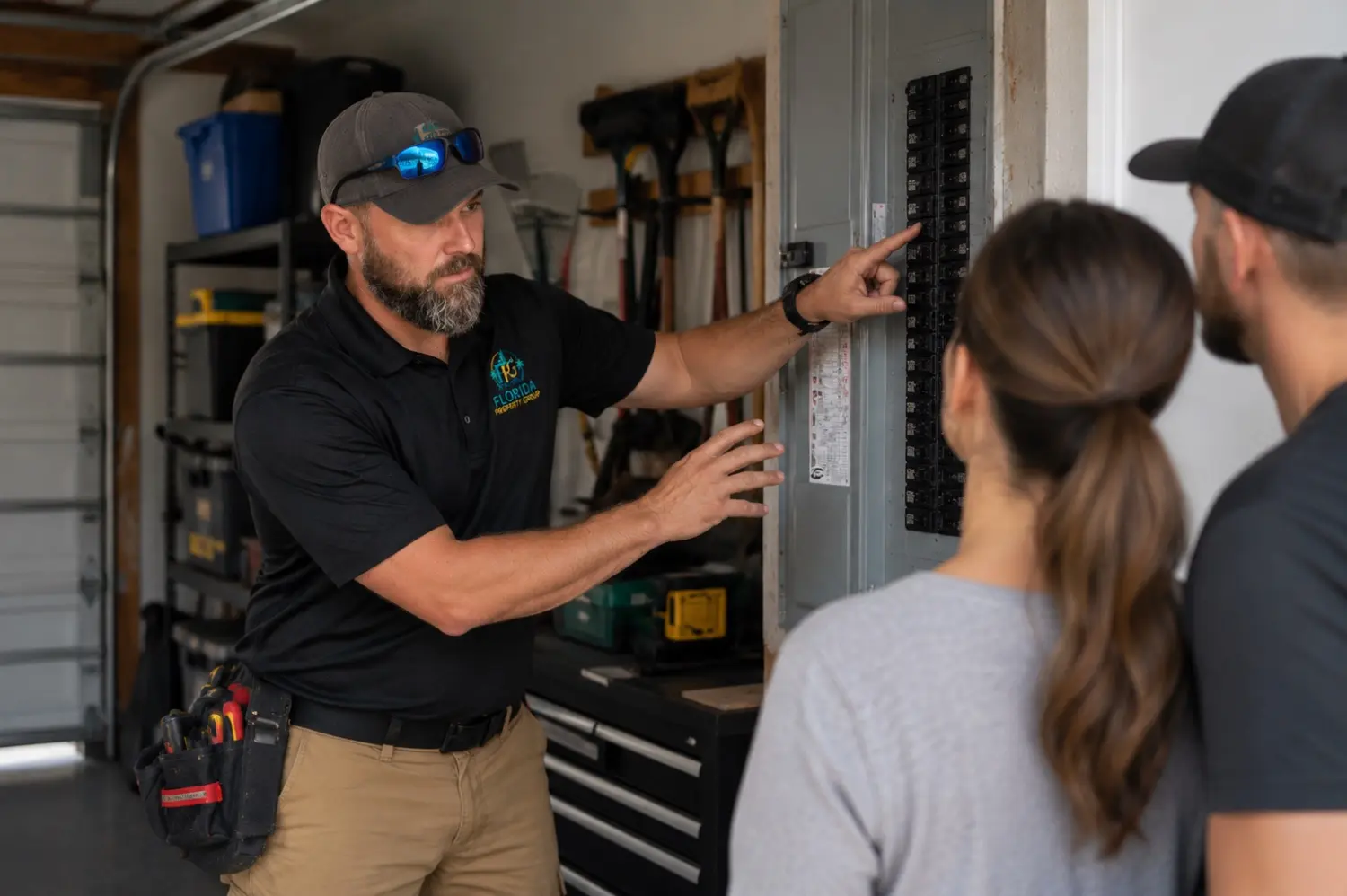
Florida Property Group inspector explaining an electrical panel during a new construction inspection Lakewood Ranch
A Florida Property Group inspector explains an electrical panel and the observed conditions to homebuyers.

Why This Matters in Southwest Florida

Lakewood Ranch construction moves quickly and a single house can involve dozens of subcontractors. Municipal inspections and builder quality-control checks are important, but they are performed for different purposes than an independent inspection for the buyer. The buyer’s inspection looks at the accessible home as a complete system and explains how visible defects may affect use, safety or durability.

Local climate and construction practices influence what an inspector may observe, but location alone never proves that a defect exists. Conclusions should be based on visible evidence at the individual property, relevant documentation and the operating conditions present during the appointment.

New Does Not Mean Defect-Free

Even experienced builders can have missed, incomplete or damaged components. Common findings include displaced roof materials, uneven attic insulation, plumbing leaks, loose electrical devices, damaged ductwork and doors or windows that need adjustment.

Useful documentation identifies the exact location, the observable evidence and the appropriate next step. Photographs provide context, but the written explanation is what helps the client understand why the condition matters.

The Best Time to Schedule

A final inspection is generally most useful after construction is substantially complete and utilities are operating, but before the final walkthrough or closing. Buyers should confirm access and correction timelines with their builder.

Conditions are not always consistent throughout a property. The inspector evaluates representative and accessible areas, notes limitations and avoids assuming that one visible location proves the condition of every concealed area.

What the Inspection Covers

The inspector evaluates accessible roofing, structure, electrical, plumbing, HVAC, interiors, exteriors and installed appliances using normal operating controls. The inspection is visual and non-invasive and complements rather than replaces municipal code inspections.

Normal operating controls and non-invasive methods are used whenever conditions allow. If a definitive answer requires dismantling, engineering calculations or specialized instruments outside the inspection scope, the report should recommend the appropriate professional.

A Clear Report Helps Communication

Photo-rich findings give buyers an organized way to communicate with the builder. The purpose is not to criticize the construction team; it is to document observable conditions so the appropriate trade can respond.

The goal is proportionate guidance. Significant safety or active-damage concerns should be clear, while ordinary maintenance should not be presented as a crisis. That distinction helps clients direct their time and contractor estimates effectively.

Do Not Forget the Warranty Inspection

Some concerns become visible only after the home experiences normal weather and daily use. An 11-month warranty inspection provides another opportunity to document issues before a typical one-year builder warranty expires.

A report is most valuable when it supports action. Clients should preserve documentation, ask questions they do not understand and obtain specialist opinions before contractual or warranty deadlines when the finding could affect the decision.

How to Prepare

Good preparation improves access and reduces avoidable limitations. Before the appointment, confirm the requested scope, gather available records and make normally accessible equipment available without creating an unsafe condition. The following steps are especially useful for this service:

  • Confirm the builder has authorized independent access
  • Schedule after utilities and major systems are operating
  • Allow time for corrections before the final walkthrough
  • Provide the inspector with builder access instructions
  • Plan an 11-month inspection before warranty expiration

Do not make last-minute adjustments solely to produce a preferred inspection result. Representative conditions, honest repair history and complete documentation are more valuable than a temporary appearance that cannot be verified.

How to Use the Findings

Send the report through the builder’s designated warranty or construction contact rather than handing over an unorganized list of photographs. Grouping concerns by roofing, electrical, plumbing, HVAC and interior finishes helps the builder assign each item to the right trade. Keep copies of the original report, repair responses and completion documentation.

The inspector explains observed conditions and recommends appropriate next steps, but contractors establish repair methods and prices. When a finding could materially affect the transaction, insurance, warranty coverage or occupant safety, obtain the specialist’s written opinion within the applicable deadline.

Important Limitations

A final new-construction inspection is visual and non-invasive. It does not verify every building-code requirement, approve engineering design or guarantee that hidden defects are absent. Municipal inspectors, engineers and specialty contractors remain important when the issue falls outside the home-inspection scope.

No inspection can eliminate every risk. The service provides a professional snapshot of accessible conditions on the inspection date. Future performance, concealed defects and intermittent problems remain possible, which is why disclosures, maintenance records and qualified specialist evaluations can be important additions to the inspection.

Frequently Asked Questions

Will the builder accept an independent report?

Many builders review independent reports and assign documented items to the appropriate trades, although procedures vary by builder.

Is this a code inspection?

No. It is a visual home inspection performed under a home-inspection standard of practice.

Can I attend?

Yes, when permitted by the builder. Attending the summary can help you understand the findings.

Schedule Your Inspection

Every home has a story. Florida Property Group helps you understand it so you can move forward with confidence. Learn more about new construction inspection Lakewood Ranch, review what our home inspections include, or schedule your inspection online. Questions? Call (941) 900-3342 or email hello@flpg.net.

A new home can look perfect during the final walkthrough and still have defects hidden behind the finishes. During a recent Bradenton home inspection, Florida Property Group inspected a single-family home built in 2026. Despite being brand new, the property had several concerns that deserved attention before the buyer moved forward.

The findings included an active ceiling leak, water inside a light fixture, an HVAC supply register covered by drywall, condensation at poorly sealed ductwork, suspected fungal growth, plumbing and electrical concerns, displaced attic insulation, standing water on the lot, and additional finish defects.

This is exactly why an independent Bradenton home inspection matters—even when the builder says the home is complete.

What We Found During This Bradenton Home Inspection

The inspection covered the roof, exterior, grounds, garage, heating and cooling equipment, electrical system, plumbing, interior rooms, bathrooms, kitchen, laundry, attic, foundation, environmental observations, pool and spa components.

These were not hypothetical examples or stock photographs. Every image below comes directly from the actual inspection report. The sample address and client information were anonymized for privacy.

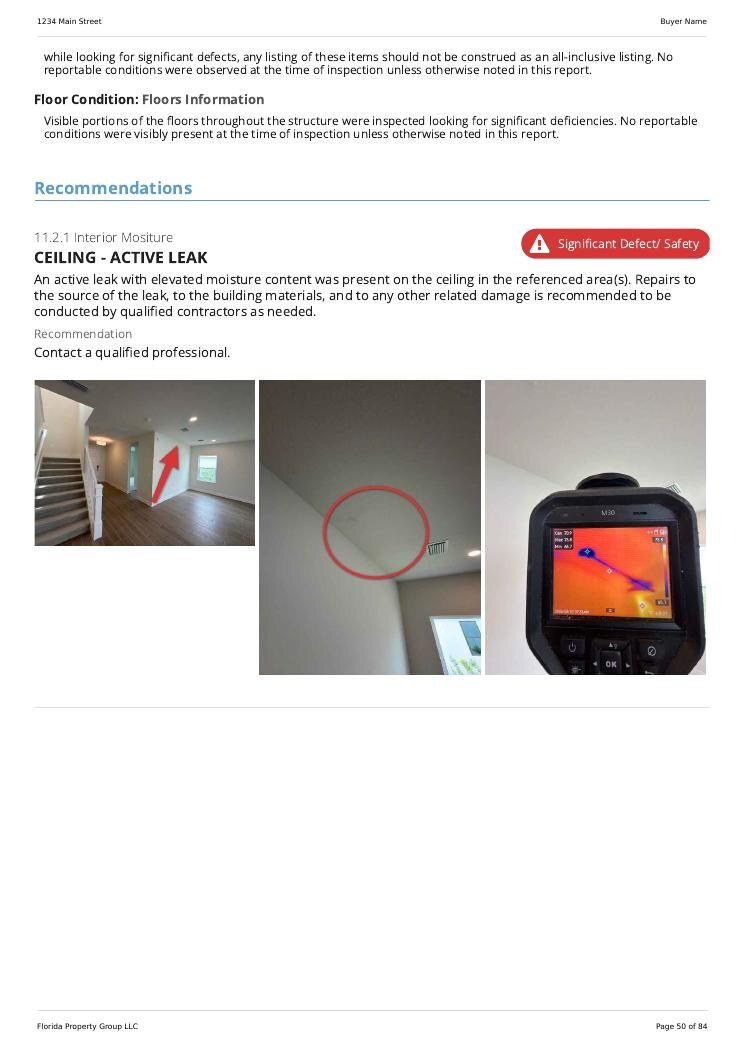
1. An Active Ceiling Leak Detected With Thermal Imaging

One of the most important discoveries was an active leak at the downstairs ceiling. The inspector operated plumbing fixtures in the upstairs guest bathroom, then observed the area below. A thermal camera showed an abnormal cool pattern, and a moisture meter confirmed elevated moisture.

Thermal imaging showing an active ceiling leak during a Bradenton home inspection
The report documented the visible ceiling area and the thermal pattern associated with elevated moisture.

Without thermal imaging and moisture testing, this condition could have been missed during a quick visual walkthrough. Left unresolved, an active leak can damage drywall, insulation, framing and nearby electrical components. The report recommended evaluation and repair by qualified contractors.

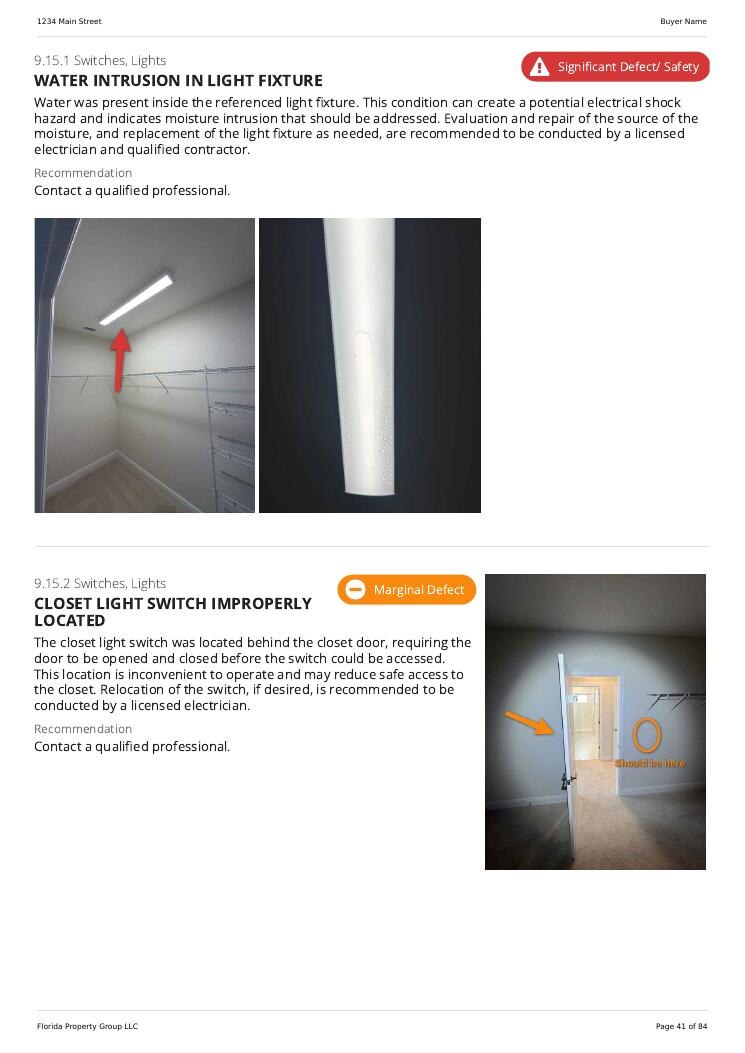
2. Water Inside a Light Fixture

Water was also present inside a ceiling light fixture. Moisture and energized electrical components are a dangerous combination because they can create a shock hazard and damage the fixture or wiring.

Water visible inside a light fixture found during a new-construction home inspection in Bradenton
Water was visible inside the light fixture, and the report classified the condition as a significant safety concern.

The report recommended locating and repairing the moisture source, replacing damaged materials as needed, and having a licensed electrician evaluate the fixture and related wiring.

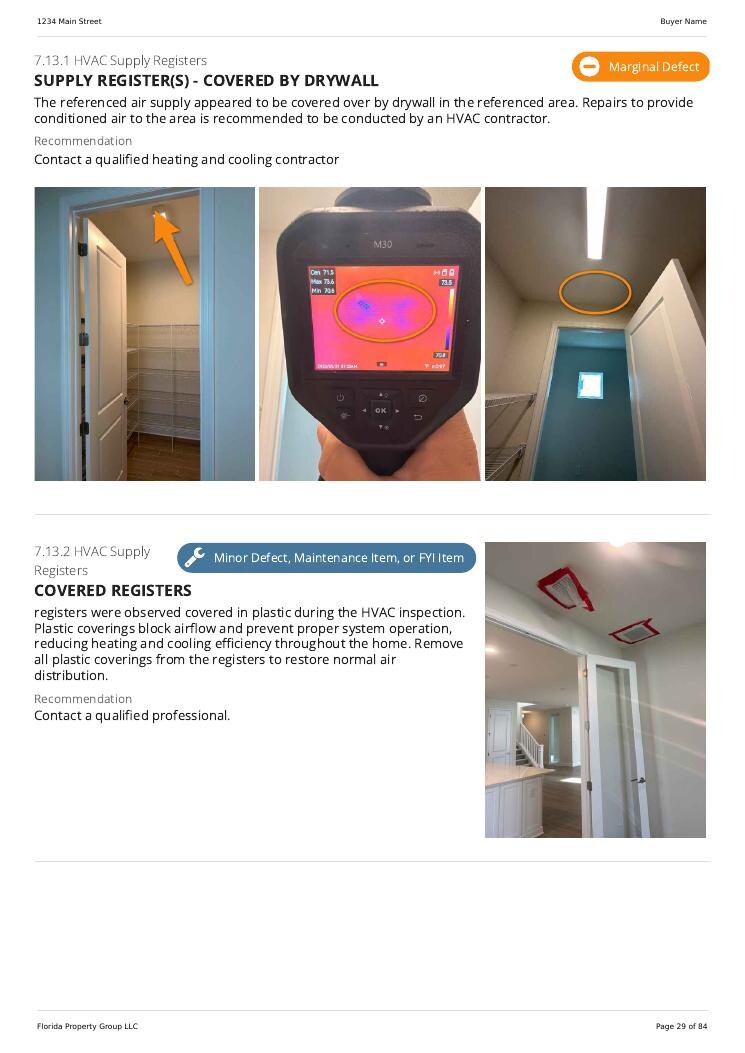
3. An HVAC Supply Register Hidden Behind Drywall

Thermal imaging also helped identify an air-supply opening that appeared to have been covered during drywall installation. The temperature pattern showed conditioned air reaching the ceiling even though no register was visible.

Thermal camera locating an HVAC supply register covered by drywall in a Bradenton home
A thermal pattern helped locate a concealed supply opening that was not visible from the finished room.

A buried supply register can restrict airflow, reduce comfort and waste energy. It may also point to a missed construction step that should be corrected by the builder or an HVAC contractor.

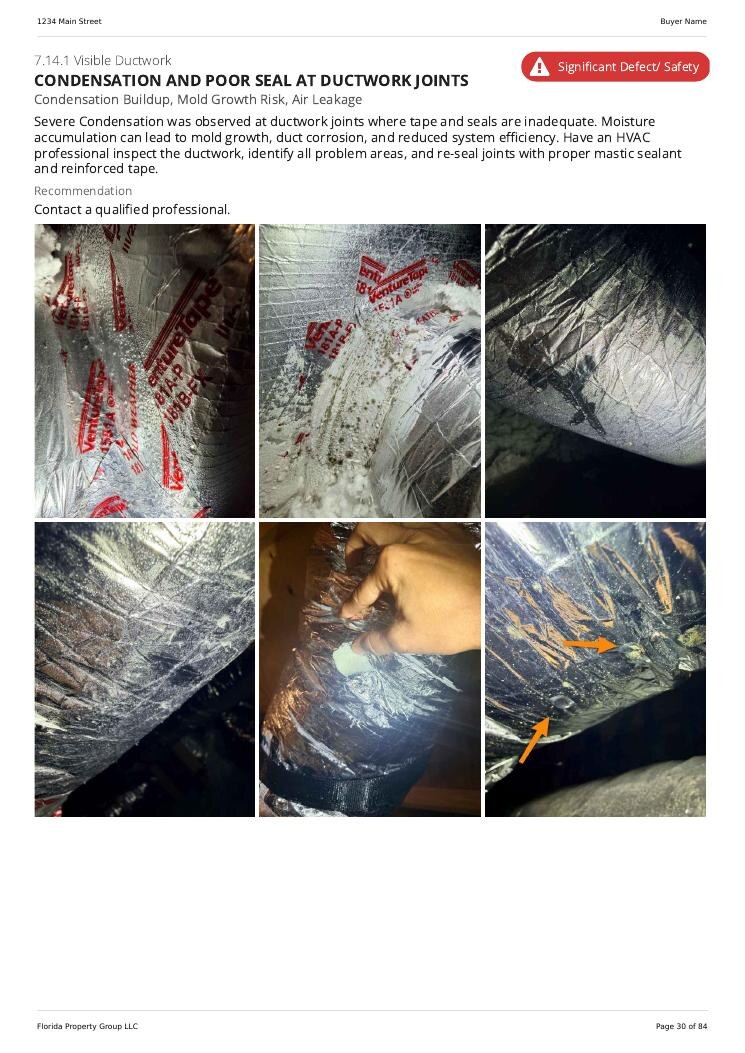
4. Condensation and Poorly Sealed Ductwork

In the attic, the inspection found condensation at duct joints where tape and seals were inadequate. Moisture buildup around ductwork can contribute to air leakage, reduced system efficiency, damaged insulation and conditions favorable to fungal growth.

Condensation and poor seals at HVAC ductwork joints found during a Bradenton inspection
Multiple duct joints showed condensation and inadequate sealing in the attic.

The report recommended that an HVAC professional inspect the duct system, identify problem areas and properly reseal the joints.

5. Suspected Fungal Growth and Elevated Moisture

Suspected fungal growth was observed on several interior surfaces, including areas near the wet light fixture. Moisture meter readings were elevated at the time of inspection.

Suspected fungal growth on interior surfaces in a new Bradenton home
The inspection documented suspected fungal growth on multiple surfaces. Laboratory testing is needed to determine exactly what the material is.

A home inspector can document visible growth and moisture conditions, but appearance alone cannot confirm whether a substance is mold. Physical or air samples must be collected and analyzed by an accredited laboratory for confirmation. The immediate priority is to identify and repair the moisture source.

Other Concerns Documented in the Report

The 84-page report also documented several additional defects and maintenance concerns:

  • Bowing fiber-cement siding panels
  • Damaged exterior-door weatherstripping and scratched glass
  • Standing water on the property after recent rain
  • A dirty HVAC filter and covered supply registers
  • An obstruction at the water-heater temperature and pressure relief discharge pipe
  • Damaged electrical wire jacket and a loose floor receptacle
  • A missing air-admittance valve below a bathroom sink
  • Moisture at the dryer exhaust vent
  • Displaced attic insulation
  • Mineral buildup on the pool salt chlorinator cell

Not every finding is a major defect by itself. The value of the inspection is seeing the complete picture before closing, while there is still time to ask questions, obtain specialist evaluations and request appropriate corrections.

Why New-Construction Homes Still Need Independent Inspections

New homes are built by many crews working on tight schedules. Even reputable builders can have missed connections, covered components, incomplete seals or damage that occurs late in construction. Municipal code inspections serve an important purpose, but they are not a substitute for a detailed buyer-focused inspection.

An independent inspection gives the buyer a photo-rich record of the home’s condition. It can also help organize conversations with the builder before closing and create a useful baseline for a future 11-month warranty inspection.

See the Full Sample Home Inspection Report

You can review the complete online report—including every system inspected, photographs, defect classifications and recommendations—here:

View the Full Sample Inspection Report

Schedule a Bradenton Home Inspection

Florida Property Group provides buyer, new-construction and warranty inspections throughout Bradenton, Lakewood Ranch, Parrish, Palmetto, Sarasota and surrounding communities. Our inspections include thermal imaging, clear explanations and a detailed photo-rich report delivered the same day.

If you are buying a home in the Bradenton area, schedule your inspection online or call/text (941) 900-3342.

Buying a newly built home in Lakewood Ranch is exciting. Everything looks fresh, the finishes are new, and the builder has completed multiple quality-control checks. Even so, new does not automatically mean defect-free. A qualified home inspector in Lakewood Ranch provides an independent evaluation of the home before you accept it from the builder.

New-construction inspections are not about assuming the builder did poor work. Modern homes involve dozens of trades, hundreds of components, tight construction schedules, and multiple inspections occurring at different stages. Small installation errors, incomplete work, and overlooked details can happen even with reputable builders. Finding those concerns before closing—or before the builder’s warranty expires—can make repairs easier to document and address.

Why a New Home Can Still Have Inspection Findings

A new home is assembled on-site by many different contractors. The foundation, framing, roofing, plumbing, electrical, HVAC, insulation, drywall, windows, appliances, and exterior finishes may all be installed by separate crews. Each trade generally focuses on its own scope of work, while a home inspector evaluates how the accessible systems and components work together as a completed home.

Municipal building inspections are important, but they are not the same as a private home inspection. A code inspector evaluates required items within the jurisdiction’s inspection process. A private home inspection is performed for the buyer and provides a broader visual evaluation of the home’s accessible condition and operation at that moment.

Common findings in new construction may include:

  • Roof-covering damage, loose materials, flashing concerns, or incomplete sealing
  • Missing, displaced, or uneven attic insulation
  • Disconnected, damaged, or poorly supported ductwork
  • Plumbing leaks, loose fixtures, reversed hot and cold supplies, or slow drainage
  • Electrical defects involving receptacles, panels, breakers, grounding, or safety devices
  • Windows and doors that do not operate, latch, or seal properly
  • Exterior drainage, grading, stucco, siding, or sealant concerns
  • Appliances or installed systems that are incomplete or not operating as intended
  • Cosmetic damage and incomplete finish work that should be documented before closing

Three Valuable Inspection Stages for New Construction

The best inspection strategy depends on the construction schedule and how much access the builder allows. In many cases, buyers benefit from inspections at more than one stage.

1. Pre-Drywall Inspection

A pre-drywall inspection occurs after major framing and rough mechanical systems are installed but before insulation and drywall conceal them. This stage provides access to areas that will soon become difficult or impossible to view.

The inspection may include accessible framing, roof structure, plumbing and electrical rough-ins, HVAC ductwork, window and door installation, visible penetrations, and other components present at the time. Because construction is still underway, the inspection is limited to installed and accessible items, but it can identify concerns while corrections are often easier to make.

2. Final New-Construction Inspection

The final inspection should take place when construction is substantially complete, utilities are active, and the home is ready for normal operation. Ideally, it occurs before the final walkthrough or closing, leaving enough time for the builder to review the report.

During a final inspection, the inspector evaluates the home’s accessible systems and components using a process similar to a resale-home inspection. This includes the roof, exterior, structure, electrical system, plumbing, HVAC, interior, attic, insulation, ventilation, installed appliances, and other accessible features.

3. 11-Month Warranty Inspection

Many builders provide a limited one-year warranty. An 11-month warranty inspection gives the homeowner an opportunity to document visible defects and performance concerns before that initial warranty period expires.

Some conditions only become noticeable after the home has been occupied through changing weather, regular plumbing use, air-conditioning operation, and normal settlement. Examples can include drywall cracking, door adjustments, plumbing leaks, condensation concerns, drainage issues, or HVAC performance problems. Warranty terms vary, so homeowners should review their builder documents and submit concerns within the required time.

What a Lakewood Ranch New-Construction Inspection Includes

Florida Property Group provides a thorough visual evaluation of the home’s accessible systems and components. Our inspections follow the applicable scope and standards for the service being performed. Findings are documented with clear descriptions and photographs so you can understand what was observed and discuss the report with the builder.

Our comprehensive inspections may include:

  • Roof coverings, flashings, penetrations, and accessible roof components
  • Exterior walls, stucco or siding, windows, doors, grading, and drainage
  • Visible structural components and accessible attic framing
  • Electrical panels, branch wiring, receptacles, switches, and safety devices
  • Water supply, drains, fixtures, water heater, and accessible plumbing
  • Heating and cooling equipment, registers, visible ductwork, and temperature performance
  • Interior rooms, ceilings, walls, floors, doors, windows, stairs, and railings
  • Attic insulation and ventilation
  • Installed kitchen appliances

We also use infrared thermal imaging as a supplemental tool during full home inspections at no additional cost. Thermal imaging may reveal temperature patterns associated with missing insulation, air leakage, possible moisture intrusion, overheating electrical components, or HVAC concerns. It does not see through walls or independently confirm moisture, mold, or hidden defects; unusual patterns are evaluated alongside visible conditions and other inspection tools.

Why Local Experience Matters in Lakewood Ranch

Lakewood Ranch includes homes built by many builders across multiple villages and construction periods. Local conditions such as intense sun, heavy rain, high humidity, wind-driven weather, and year-round air-conditioning use can influence how homes perform. An inspector familiar with Southwest Florida construction knows where these conditions commonly affect roofs, exterior sealants, attic ventilation, insulation, drainage, HVAC systems, and moisture-sensitive materials.

A local inspection also provides practical context. Not every finding is an emergency, and not every cosmetic issue affects performance. A useful report should help you distinguish routine corrections from items that deserve prompt evaluation, allowing you to have a more productive conversation with your builder.

When Should You Schedule the Inspection?

For a pre-drywall inspection, contact the builder early and ask when the home will be ready for inspection before insulation or drywall installation. Construction schedules can change quickly, so coordination is important.

For a final inspection, schedule after utilities are active and construction is substantially complete but before closing whenever possible. The inspection should occur early enough for you to review the report and deliver relevant findings to the builder.

For an 11-month warranty inspection, schedule several weeks before the warranty deadline. This allows time to complete the inspection, review the report, and submit documentation according to the builder’s process.

Frequently Asked Questions

Does a brand-new home really need an inspection?

Yes. New homes can have incomplete work, installation defects, damaged materials, or systems that do not operate properly. An independent inspection gives the buyer a detailed snapshot of accessible conditions before closing.

Is a private inspection the same as a municipal code inspection?

No. Municipal inspections are part of the permitting and code-compliance process. A private home inspection is performed for the client and evaluates the accessible condition and operation of the completed home within the inspection’s scope.

Will the builder allow a third-party inspector?

Many builders do, but their policies, notice requirements, and available inspection stages vary. Review your contract and coordinate with the builder or construction representative before scheduling.

Can the inspector guarantee the builder will repair everything?

No. The inspector documents observed conditions and recommends appropriate next steps. Repair decisions depend on the purchase agreement, builder warranty, applicable requirements, and negotiations between the parties.

Should I attend the inspection?

Attendance policies may depend on the builder and construction stage. When permitted, attending near the end of the inspection can be helpful. You will also receive a detailed report and can contact us with questions after reviewing it.

Choose a Home Inspector in Lakewood Ranch Who Works for You

Every home has a story—even when it has never been lived in. Florida Property Group helps buyers understand that story through honest, unbiased inspections, advanced technology, clear same-day reporting, and continued support after the inspection.

We serve Lakewood Ranch, Bradenton, Sarasota, Parrish, and surrounding communities. To learn more, visit our home inspection overview, review our inspection services, or explore our Lakewood Ranch home inspection page.

Ready to schedule a new-construction inspection? Schedule online, call (941) 900-3342, or email hello@flpg.net.

Many homeowners choose to renovate their homes for various reasons. Be it to give it a new look, increase property value, address safety concerns, or just simply fulfill their specific needs. 

Renovation is always great for your home, but you have to approach it carefully. If not, things can go really wrong really fast and put you in jeopardy.

While it can provide the desired space and aesthetics you want, if not properly planned, it can result in safety hazards, too.

Imagine you are adding a pantry to your kitchen. Without proper planning and safety measures, it can impact the structural integrity of your beloved home and put you and your family at risk.

That is why you should always get a home renovation inspection before you remodel your house.

Although it is a major one, safety is not the only reason you should get a home inspection before renovation.

There are many other reasons and benefits, and that is what we will discuss in this blog.

But first, let me explain what a pre-renovation inspection exactly is.

What is a Home Renovation Inspection?

Like any other kind of inspection, a home renovation inspection is an examination of your home. 

Herein, a certified home inspector, like myself, inspects or evaluates your home’s overall condition. We check the structural integrity of your home and other components and systems installed in the home, like your HVAC system.

Also, we look for any issues that need to be addressed, like water leaks or safety hazards (such as mold), before you start your renovation project.

Should I Get a Home Renovation Inspection?

Absolutely yes. You should always get one done.

We all like to think that we know everything about our home. But there are some things only an expert can see.

Let’s say there is a dripping faucet in your bathroom. Nothing major, right?

But it can create the perfect environment for mold to grow, which can become a safety hazard.

The thing is, most homeowners see these small issues as they are, but an expert sees what they can potentially become.

So, even if you think everything is perfect, from my experience, there is always something, small or major, that needs to be fixed.

You might also like to read: New Construction Home Inspection: Why Is It Necessary?

5 Benefits of Home Inspection Before Renovation
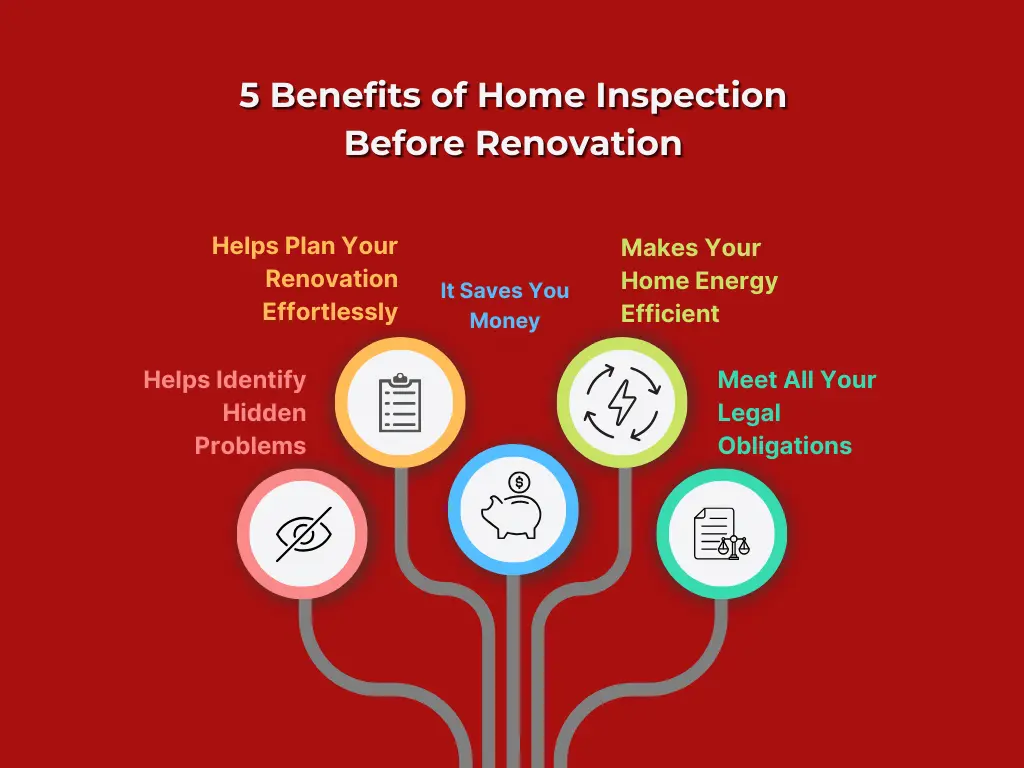
5 Benefits of Home Inspection Before Renovation

1. Helps Identify Hidden Problems

Did you know that old/damaged plumbing and faulty electrical systems are among the major causes of home insurance claims nationwide? 

Worse, the latter is even responsible for tens of thousands of electrical fires. In fact, according to the US Fire Administration, there are an average of 28,600 electrical fires every year in the country

Thankfully, an inspection before a home upgrade provides an excellent opportunity to address these issues once and for all. 

By getting a home inspection before renovation, you can identify hidden issues like these and address them in time.

If not, they can affect your renovation plan or become a huge problem down the road.

For instance, one time, I inspected this beautiful home just before the remodeling began. When it was time to check the bathroom, I noticed that there was mold hiding behind the walls.

From the outside, the bathroom was in pristine condition, but on the inside, it was a safety hazard about to happen. But remember, it is pretty common to find mold in such places.

However, If it was left unchecked, it would have become a major, expensive problem. This is something that you don’t want to deal with after you have just spent your money on remodeling.

2. Builds Scope of Work and Helps Plan Your Renovation Effortlessly 

The second benefit you get from a home inspection before renovation is that it helps you plan your renovation.

For instance, the inspection provides you with a complete checklist of all the essential areas that need an assessment. Also, you get a detailed report that highlights all the identified problem areas. 

Now, you can use this information to address all the issues efficiently and execute your renovation plans accordingly.

So you spend a little bit of money on a pre-renovation inspection, but at the very least, you know what you’re getting.

You’re aware of any defects in the home, you’re aware of any repairs you’re going to have to make. You now know about the money you’re going to have to spend before you renovate the home and make this massive financial commitment.

3. It Saves You Money

Another really good reason to get a home inspection before renovation is that it prevents unnecessary repairs down the road. 

Let’s say you spend between $300 and $600, which is the average cost of home inspection in Florida, on your home inspection.

Yes, that seems like a lot.

But the renovation itself is one of the biggest investments you’ll make, and to avoid unnecessary repairs down the road, an inspection is totally worth it.

After all, You identify issues in their early stage and address them before they have the chance to become something big in the future.

For instance, Let’s say you find mold in your home. 

Right now, it’s just giving your home an ugly look. But if left untreated, it can eat away at your house and lower its structural integrity.

Not to mention, it is also a health hazard. And if you are allergic, it can become a matter of life and death.

4. Makes Your Home Energy Efficient

A big part of home inspection is to identify any issues with your home’s energy usage.

Now, many people think that if their electrical appliances are in great condition, their home is energy efficient. But that is not the case.

For example, a major portion of your home’s energy is used by your HVAC systems. Now, if there is any kind of issue, big or small, with the insulation of your home, the HVAC system would use that much energy to keep your home warm and cozy in the winter.

That isn’t very energy efficient, is it?

Inspectors check your home for small details like this. They make sure that your home is properly insulated and ventilated, which helps you save big-time on energy bills.

5. Meet All Your Legal Obligations

When you are remodeling your home, you need to make sure that you comply with all building codes and safety regulations.

If you don’t, there are two things that can happen.

First, you might get a visit from local authorities, and if everything isn’t up to code, you may have to pay a hefty fine and in the worst case, revert the changes you made.

For instance, If you put a wall in two and add another room, you might have to get rid of the wall altogether. And you know how tedious that is going to be.

Second, and more importantly, you don’t want your family to live in a house that has had structural changes and isn’t up to code. That’s because doing so will make disasters like the roof falling possible on a rainy or windy day.

Furthermore, Not only is shoddy work a danger to your family, but it is also a danger to the entire neighborhood. It can also put the safety of your neighbors at risk. 

For instance, If gas lines are not built to code, dangerous gas leaks can take out several houses.

As a home inspector, I make sure that you comply with every standard and that you can avoid all these problems altogether.

4 Essential Checks In Home Inspection Before Renovation

1. Home’s Structure

In most cases, remodeling is going to change the structure of your house.

For instance, Changing the layout of your home, like by adding or removing an interior wall, is going to affect its structural integrity.

And you don’t want to live in a house with compromised structural integrity. That is a disaster waiting to happen.

In a home inspection before renovation, inspectors check your foundation and load-bearing walls. We tell you the steps you can take to boost your home’s structural integrity and help you plan your renovation in a way that doesn’t compromise your home’s structural integrity.

2. Roof

Roof is another major component of your home. And If you are planning to add something to your roof in a model, like a skylight, you should make sure that your current roof is up to the task.

A home inspector will let you know if it is safe to alter your roof and, if not, recommend the changes required to get the job done.

3. Basement

I have seen many of my clients wanting to change their basement into something more useful other than the storage that it is.

But the thing with basements is that they get damp, and with dampness comes mold.

A home inspector will check you for any signs of mold, and if they find any, they will recommend ways to get rid of it.

And if they don’t find any, they can help you remodel your basement to minimize the risk of mold, water pooling, and water damage down the road.

4. Mechanical Systems

In remodeling, we mostly add new things to our house, and it can possibly cause a strain on the mechanical systems.

For instance, if you add a bathroom, it will affect your plumbing system. Similarly, if you expand your living room, it will affect your HVAC and electrical system if you expand your living room.

So, it is important that you get these systems inspected and check their condition and load-bearing capacity before you begin with your renovation project.

A home inspector will evaluate these systems and recommend changes they need to work flawlessly in the new environment.

Home Renovation Inspection Checklist

1. Structural Integrity

  • Check the foundation for cracks or signs of settlement.
  • Inspect load-bearing walls for any alterations or compromises.
  • Assess the impact of proposed changes on the overall structure.

2. Mechanical Systems

  • Evaluate plumbing systems for compatibility with new additions.
  • Look for signs of leaking pipes or faulty plumbing.
  • Assess the capacity and condition of HVAC systems in relation to expanded living spaces.
  • Examine electrical systems for any necessary upgrades or changes.

3. Roof

  • Inspect the current roof condition.
  • Check if the existing roof can support additions.
  • Make sure there are no broken or damaged tiles or shingles.

4. Basement

  • Check for signs of dampness and water damage in the basement.
  • Make sure there are no signs of moisture.
  • Assess the risk of mold.

5. Safety Hazards

  • Check for any exposed wiring or unstable structures.
  • Make sure smoke detectors and carbon monoxide detectors are properly installed and working.
  • Look for signs of pest or termite infestation.

7. Legal Compliance

  • Confirm adherence to local building codes and regulations.
  • Make sure that the proposed renovations meet legal standards.

Should I Get A Home Inspection During Renovation?

If we go by the book, you definitely should.

Home inspection during renovation helps you make sure everyone is doing their jobs correctly, as they should, and everything is up to code.

But after the renovations are done, city inspectors are going to ask you to get an inspection done anyway to make sure that everything is done correctly.

So, if you think about it, it is kind of a moot point.

That being said, if you get an inspection done during the renovation, the final inspection will go much smoother. Home inspectors will make sure that there is nothing to find in the final inspection.

Plus, it would put your mind at rest, knowing that your home is in safe hands, and you cannot put a price on that.

Should I Get a Home Inspection After Renovation?

Yes, you absolutely should.

You may be wondering exactly why since you already got one done before the remodeling.

Well, the home inspection before renovation helps you understand the current condition of your home before you make any changes to it. 

If not, there may be some issues lurking around that you are unaware of, and it will cost you later.

Likewise, a home inspection after renovation helps you understand the current condition of your home after you have made the changes you wanted.

The inspector will confirm the contractor has done everything exactly the way you wanted, everything is up to code, and everything falls under the specifications of your permit.

If that is not good enough, the city inspectors are going to ask you to get a home renovation final inspection anyway.

What If You Don’t Get a Home Inspection After Renovation? 

If you do not do the final inspection, a couple of things will happen:

First, your paperwork won’t be closed out, and the tax info on your property won’t be updated. 

The value of your home won’t increase for tax purposes. Meaning you can’t loan against the value added by your renovation. You’ll also not be able to have that value reflected on a sale as far as it pertains to a mortgage appraisal.

Secondly, your permit will expire, and you will need to restart the process when you finally do go to settle everything out. The current permit will just show as incomplete.

You can get it done later as well. Typically, permits require a progress inspection every six months, which can be as little as saying, “Hey, here’s where we’re at with it,” and they’ll extend it another six months.

My advice is to get it done as soon as you can. 

Sure, it will cost you an extra couple hundred dollars, but believe me, it is worth every single penny.

You might also want to read: 11 Month Home Inspection: Why Is It So Important

Get a Thorough Home Inspection Plan and an Estimated Project Cost for Free!

In The End

In my professional opinion, a home renovation inspection is something you should get done whenever you are planning to make major renovations in your home. Although it is an extra step, it’s an important one.

Like I said before, you don’t want to find mold hiding behind your bathroom walls after you have renovated it.

Not only would you have to get it removed, but it also means that you would have to work on your bathroom all over again. Not to mention the added cost.

We both know that isn’t going to be cheap and you sure want to avoid it. And that’s just one of many examples. It could be anything.

So, what you want to do is identify and address these issues as soon as you can. 

Not only would it save you your dollar bills, but it would also save you from the extra work and stress.

Welcome to Florida Property Group

At Florida Property Group, our team of expert home inspectors is here to help. 

Our team of expert home inspectors with decades of experience can help you make sure your renovation project is done just right, and make sure your house is a safe home.

But enough about us, we want to hear about you.

You can call us at (941) 900-3342 or fill out the form here, and we will get you started.

Nate Standifer

Nate Standifer

Nate Standifer is co-founder of Florida Property Group and a Florida-licensed home inspector with 15+ years of experience across telecommunications, low-voltage electrical inspections, and residential property inspections. An InterNACHI Certified Professional Inspector®, he and the Florida Property Group team complete approximately 1,500 inspections annually across Bradenton, Sarasota, Lakewood Ranch, and surrounding Southwest Florida communities.

InterNACHI Certified • RASM Member • SUPRA Access
The question of having a new construction home inspection performed can seem a little weird. 

After all, you hired a quality builder to craft your home, the city inspectors already came by and signed off on it. 

But one of the biggest mistakes you can make is to assume that the house is perfect just because it’s brand new.

There could be issues that can go unnoticed if you don’t have trained eyes.

That is exactly why new construction home inspections are so important. It makes sure that everything is perfect in your new home.

If it isn’t, you can hold the builder accountable.

In this blog, I will tell you all about home inspection on new construction, like what it is and how it can help you save thousands of dollars. 

I will also include a new construction home inspection checklist, which you can use yourself and make sure everything is just right.

So, Let’s get started.

What Is New Construction Home Inspection?

In new construction home inspections (also called new home construction phase inspections), inspectors check the quality and safety of your newly built home before you move in or the builder’s warranty expires. 

It is usually done by a professional home inspector, like myself, who evaluates the condition of the home’s major systems, structural integrity, functionality, and appearance of your home. 

It helps you identify any defects, errors, or damages that may have occurred during the construction.

This way, you can ask the builder to fix them before closing the deal or within the warranty period. 

I know it’s been a long process with lots of paperwork and unexpected expenses. But, it would be a smart call to have an independent inspection performed on the property before your final walk-through.

Why Is It Necessary?

1. Newly built homes are not always perfect

Building a home is a complex process, and sometimes mistakes happen. Even the best builders aren’t perfect.

Sometimes corners are cut to speed up the building process, sometimes incorrect materials are used, and sometimes builders bring in subcontractors who may not complete the work to the builder’s standards.

Let’s say they installed a faulty HVAC system. You wouldn’t know about it until you use it, and by then, it might be too late.

New home construction phase inspections check every detail of your newly built home. Inspectors check the material used, the appliances, and every aspect of your newly built home and make sure you get what you were promised.

2. New construction may not be up to building code

When a new home is built, county building inspectors come and check that it is built up to code. But, they only check if the house meets minimum standards. Home inspectors go over and beyond to conduct in-depth assessments and determine quality and safety standards.

In my experience, I have found problems, like improper insulation in the attic, and it happens significantly more than you would think.

So, on paper, the house is good to go. It won’t collapse or anything, but you may not get what you wanted.

3. It protects you and your investment

I know hiring a home inspector separately is money out of your own pocket. But it is worth every single penny, as it helps you solve issues before they turn into a huge problem.

What would you do in winter if your attic doesn’t have proper insulation?

And you would ideally live in that house your whole life, so it isn’t like you just need to spend one or two winters there.

So, the only thing you could do is get your home proper insulation, and it would obviously be expensive.

And that is just one scenario. There could be problems with other systems as well, like the electrical systems or the foundation.

Yes, it would cost you some extra money. But it would also make sure you get your lovely home in perfect condition and save you from potentially expensive repairs and replacements.

New Construction Home Inspection Checklist

Well, the thing is all, we inspectors are essentially the same and we all look for the exact same things, and while the list is really extensive, I can break down a few points.

Exterior

When looking at the exterior, I start with concrete.

The thing to remember about concrete is that if it’s gray, it’s hard, and it cracks. 

What I am looking for, though, is substantial displacement. If there’s an inch-and-a-half or two-inch displacement in parts of the concrete, the driveway connecting to the garage, the sidewalk pulling away from the front patio, or the patio sloping down away from the foundation.

Drainage downspouts and drains are two other huge areas on the exterior that I check to make sure that those downspouts are taking water away from the foundation.

So, a lot of times, if those tipouts that you have tipped out to be the extension on the downspout. 

You can just turn down those tip-outs, or if they have those drainage pads that just the gutters hit, and then it whisks water away. 

They’re just wanting to make sure that the water when it rains or anything like that is coming away from the foundation.

Same thing with drainage; I don’t want any of the topography of the home towards the foundation. All of that water should be going away, so the grading should be away from the foundation of the home.

Foundation

Speaking of foundation, I look at it on the outside and the inside as well.

On the outside, I look for any cracks in the foundation. Is there anything structurally that may be wrong with the home?

A sinking house is a real money pit, and it is best to identify any signs of foundation problems and address them as early as possible.

Now understand this too: not every inspector is an engineer, but they will point this out. So you’re gonna want to consult a structural engineer for this.

I then look to see if the nails and countersunk are too far (that will allow water in behind the siding stucco) and if there are any substantial cracks. 

Again, not hairline, but are there really big cracks in the stucco where water is gonna be able to penetrate, get behind there, and could create some issues long-term?

Next comes paint. I check if the paint is faded or cracked or if there’s dry, rot, or water damage.

Windows

For windows, inspectors look at windows for chipped or cracked glazing, is a window pane broken altogether, and whether the window needs to be replaced.

A lot of times, you’ll see where windows are foggy, and that is because the seal has been broken and that interior is just now susceptible to water. 

So they’re looking for the overall condition of windows because that’s a fairly substantial expense if you were to go to replace those.

Attics

In the attic, inspectors get in and inspect the roof for any broken shingles or tiles and look for proper ventilation if the roof vents effectively.

We check to make sure that all of the bathroom vents that are vented to the attic can get that air out.

I am looking to see if the insulation is effective, if the insulation is displaced, it has blown around. In this case, it needs to be spread back out.

In the end, I am looking for signs of water intrusion on the roof decking, which means I have to look at the plumbing.

Plumbing

To make sure there are no leaks under sinks, I run a cycle in the dishwasher, turn the sinks on, turn the showers on, and look for any noticeable leaks on the surface, whether that be in the p-traps below the sinks or otherwise.

Electrical

At electrical, inspectors check if the house follows the code, if the GFCI used is sufficient for the home, does this switch works or not, and if not, why this switch doesn’t work. 

To look at these surface area electricals, inspectors go outside to the electrical panel and the garage or wherever your electrical panel may be, and they’re going to take a look.

In the panel, they check:

  • Is this panel overloaded
  • Is there still space in it
  • Is everything effectively distributed throughout the house

It makes sure that you don’t have a major problem down the road.

Mechanicals

In mechanicals, the age of your furnace and your air conditioner is very important. Those are pretty substantial expenses when you move into a home.

Inspectors look at the age of the water heater and let you know what the average lifespan is on those and about what the life expectancy of those particular components is and what they have left in them. 

Typically, when it comes to fireplaces, inspectors don’t look at them too terribly closely. They simply check things like:

  • Is the glass on gas fireplaces
  • Is the glass cloudy? Should that be clean 
  • Take a quick look at the flue

They typically look at small things like that.

Also, they are probably going to recommend some sort of service or cleaning.

A little insider tip:

When it comes to new home construction inspection in general, one thing that you can just bank on is an HVAC service that needs to be completed every single year. 

So, if your home hasn’t had an HVAC service completed within the last year, you can expect that the inspector is going to recommend that; the same goes for your fireplace. 

One other thing to keep in mind. Home inspectors are not going to fix the issue. They are going to make the recommendations, and you have to go out and have that professional (certified electrician, plumber, etc.) look at that particular issue.

When To Schedule Home Inspection For New Construction?

Well, the best time to schedule new home construction phase inspections is when the builder doesn’t want you to get one.

Jokes aside, new build inspections take place at any time during the construction process.

But the three most common, which I recommend, are going to be pre-drywall, pre-walk-through, and warranty checks.

Pre-drywall inspections

Pre-drywall inspections take place during the building process before the finishings go in. 

The structural elements are all in place, the roof is on, and plumbing and wiring are installed but still exposed. This gives the inspector the opportunity to see the exposed systems and verify they were installed correctly.

These systems will soon be hidden from view, so resolving any issues at this stage will be much cheaper than waiting until they become a big problem that requires demolition to fix.

Pre-Walk-Through Inspections

Pre-walk-through inspections occur closer to the closing date when the home is almost completely finished. Minor jobs may still be incomplete, such as tile work or painting, but all the major systems are in place.

These inspections take place after the city inspector has signed off on the property. They’re there to verify that the house was built to municipal code and is safe to occupy.

Pre-walk-through inspections are meant to give you a checklist of what still needs to be addressed before you sign the final paperwork. It includes things like incorrectly installed appliances, moisture issues, or structural concerns.

It should be scheduled as close to the closing date as possible but not so close that it may interfere with the closing.

11-Month/1-Year Warranty Inspection

As I mentioned in my previous blog on 11 month inspection, our industry figures show that, in most cases, homeowners face issues during the first year.

Warranty check inspection happens after you’ve moved into the home, usually 11 months or a year after closing.

This inspection takes place about a month or so before the expiration of your home warranty.

It’s to catch any issues that may have popped up in the first year. These issues may still be the builder’s responsibility.

So, think of it as your last chance to have everything addressed before the home becomes your complete responsibility.

How Much Does Home Inspections on New Construction Cost?

Well, it depends on house to house. There are many factors that inspectors consider to finalize the cost of the inspection, like the size and the location of your home.

But, for an average home, you can expect to pay around $300-$500 to get it successfully inspected.

To know about it in detail, you can read my other blog on how much is a home inspection in Florida.

Get a Thorough Home Inspection Plan and an Estimated Project Cost for Free!

Conclusion

Getting a home inspection on new construction is one of the best decisions you can make to protect your investment and, more importantly, your home.

Although it serves many purposes, the key benefit you get from it is that you get exactly what you paid for. Basically, it ensures that you don’t get ripped off.

You make sure that the builder does not cut any corners, like using cheap materials, that the home is constructed following the building plans, that it complies with building and safety codes, etc.

And it does not even cost that much, especially if you consider all the benefits you get from it.

New Construction Inspections in Our Local Communities

Florida Property Group performs pre-drywall, final and builder-warranty inspections throughout Lakewood Ranch, Parrish, Bradenton and Sarasota. These fast-growing communities have active construction, and an independent inspection can document visible workmanship or installation concerns before they are covered or the builder’s warranty expires.

Learn more about an 11-month warranty inspection or schedule a new-construction inspection.

Nate Standifer

Nate Standifer

Nate Standifer is co-founder of Florida Property Group and a Florida-licensed home inspector with 15+ years of experience across telecommunications, low-voltage electrical inspections, and residential property inspections. An InterNACHI Certified Professional Inspector®, he and the Florida Property Group team complete approximately 1,500 inspections annually across Bradenton, Sarasota, Lakewood Ranch, and surrounding Southwest Florida communities.

InterNACHI Certified • RASM Member • SUPRA Access
Buying a newly constructed home can be the most reassuring real estate investment. After all, there’s no worry about structural, electrical, or any other potential problems. 

You move into a brand new home in what is likely a new neighborhood and enjoy your sweet abode carefree. At least, this is what real estate companies promise you at the time of purchase. 

But is your home really so perfect and spotless? 

Industry figures suggest that you might spot certain issues during the first year of construction itself. 

And this is exactly where an 11 month home inspection comes in handy. Also called a home warranty inspection, it provides critical insights into your property’s condition before the builder’s warranty coverage is over. 

So what’s more to an 11 month inspection, and more importantly, why is it so essential for new homeowners? 

Well, read on, as I’ve compiled everything that you need to know about builder warranties and home inspections. 

What is an 11 month home inspection? 

An 11 month home inspection is a complete home inspection conducted by a licensed inspector, who also delivers an inspection report at the end of the assessment. 

This is not different from a typical home inspection that you get before closing a real estate purchase deal or during regular intervals. Meaning you can expect the exact same inspection procedure where an inspector visually assesses the condition of your home and brings potential problems to your notice. 

However, as the name suggests, the only difference here is the inspection timeline. That’s because an 11 month inspection is usually conducted after your new home enters its eleventh month. 

What is the purpose of an 11 month inspection? 

Before we talk about the importance of an 11 month property inspection, it’s essential that you understand what purpose it serves exactly. 

You see, a newly constructed home can take up to a year to settle. And it is only after a year of seasonal changes, including the wet months, winters, etc., that you can know well the home stands these events. 

Also, it is possible for the property to develop some problems during this time. For instance, water seepage into the basement, soil erosion around the foundation, etc., are some common rain-induced problems that new homes face

Now, most builders cover these initial damages by offering a 12 month home builder’s warranty. This includes everything from foundation to roofing to electrical systems and more. 

But the only way you can avail this warranty is by knowing precisely where the problems are. And that’s when an 11 month or end of warranty home inspection becomes crucial, providing you with a clear understanding of problems that might have emerged. 

In fact, this is why this inspection is also called an 11 month warranty inspection. 

Pro tip

Why is a home warranty inspection so important? 

Now that we’ve seen what 11 month inspections are and what purpose they serve, let’s turn to the million-dollar question, i.e., the importance of these inspections. 

To put it straight, a warranty inspection safeguards your big-ticket investment in a new home and ensures you don’t end up footing the bills for expensive repairs. 

Wondering how? 

Well, as we discussed earlier, a newly constructed home can develop problems more likely than not. And they most commonly show up in the form of leaky basements, gaps and cracks in the decking, minor leaks around windows, etc. 

However, you may not be able to spot these issues until they’ve become huge enough, which isn’t usually the case during the first year. For instance, you’ll likely notice a small leakage around windows only when the surrounding area starts to rot or develop mold. 

Also, by the time you detect the problems, the builder’s liability in the form of warranty coverage might already be over. Meaning you’re going to pay for the repairs entirely at your own expense. 

How does an end of warranty home inspection make a difference? 

An 11 month home inspection detects the emerging problems right at the start and well in time. That’s because while it’s hard to naturally spot minor or hidden problems, home inspectors are trained to detect them. 

Also, the fact that one such inspection is conducted in the eleventh month of home construction/possession means two things: 

  • First, the newly built property has been through multiple weather conditions, and the problems have become visually detectable. 
  • Second, your home is still under warranty coverage by the builder, who shall pay for all the repairs. 

The result: You need not pay for the necessary maintenance out of your pocket. 

What does an 11 month warranty inspection checklist cover?

Like we saw earlier, 11 month warranty inspections aren’t different from a typical home inspection. 

So, the areas covered during one such inspection are different either and include thorough assessment of your home’s crucial systems from the inside out. 

In all, an 11 month inspection covers the following areas of a home as per InterNACHI’s standards: 

  • Interior and exterior walls 
  • Doors and windows 
  • Roofing and attic 
  • Basement and crawlspace 
  • HVACs 
  • Electrical systems 
  • Plumbing 
  • Chimney and fireplace 

Curious about the ins and outs of a home inspection? 

You can go through our blog – Third Party Inspection For New Home: A Complete Guide

What are the common issues found during a home warranty inspection? 

It is commonplace for home inspectors to spot problems during an end of warranty home inspection. For instance, while inspecting new homes, I usually come across structural, foundational, roofing, and plumbing issues, to name a few. 

And although these problems are mostly minor, there’s a good chance they’ll become a huge concern if not spotted and fixed on time. 

Here are some common problems that I encounter during 11 month warranty inspections: 

#1. Structural and foundational

Among the issues flagged frequently during 11 month inspections are structural and foundational damages. From cracks in the walls or ceilings to uneven or squeaky flooring to drywall nail pops, these are all signs of structural problems. 

#2. Roofing 

The roofing should be in perfect condition after 11 months of installation. After all, modern-day roof shingles are designed to last for an average of 50 years. 

However, I’ve often noticed roofing issues in new homes in the form of damaged or missing shingles, flashing damage, water leakages, etc. 

Now, these are all signs of poor workmanship and the builder is responsible for fixing them, at least during the warranty period. 

#3. Doors and windows 

Your doors and windows should be properly sealed when closed to prevent moisture intrusion, energy loss, and gradual damage. But that’s not the case with a lot of new homes where I’ve detected problems such as gaps, alignment issues, leaks, wear and tear, among others. 

#4. Plumbing and electrical systems

Common plumbing issues detected during an 11 month inspection mostly include leaky pipes and clogged drainage systems. Similarly, exposed wirings, faulty outlets, etc., are some of the electrical systems I often spot. 

These are all covered by the builder warranty, which means you don’t need to bear the maintenance expenses. 

How much does an 11 month warranty inspection cost? 

When it comes to the overall cost of an 11 month home inspection, there isn’t a one-size-fits-all formula. That’s because the actual cost is determined by a lot of factors, including your home’s size and location, the inspection firm or inspector you hire, etc. 

However, as per HomeGuide, you can expect to pay between $250 and $350, on average, for an 11 month inspection. 

Wondering how much exactly you’ll pay for an inspection in Florida? 

You can go through our blog – How Much Is A Home Inspection In Florida

11 month home inspection: Pro tips 

An 11 month inspection is indeed the best way to avail builder warranty and safeguard your interests as a new home buyer. Moreover, this is the only way you can hold the builder liable for all things construction quality. 

But how exactly can you do so? 

Well, here are some of my pro tips to get a complete 1 year home inspection and avail the warranty converge: 

#1. Know that the warranty covers 

Before you even start with the home inspection and warranty claims process, it is essential to know the exact extent of builder warranty coverage. 

You see, while the builder warranty covers everything that has to do with construction, some areas are out of their liability. 

In all, you can expect your builder to cover the following areas: 

  • Foundation
  • Basement seepage and leakage
  • Drywall 
  • Electrical systems 
  • HVAC systems
  • Roofing
  • Plumbing 
  • Doors
  • Windows
  • Carpentry wood 
  • Sidings 
  • Waterproofing and insulation 
  • Exterior and interior paint 

#2. Know what the warranty doesn’t cover 

Even though the builder is liable for maintenance during the warranty cover, they do have the right to deny coverage under certain circumstances, including: 

  • Problems that may arise due to homeowners’ neglect 

As a homeowner, it is your responsibility to undertake basic maintenance such as pest removal, trimming plants around the property, clearing gutters, etc. 

So, if defects or issues arise out of neglect on your end, the builders can’t be held responsible. 

  • Problems caused by natural events 

Any damage caused by extreme weather events such as hurricanes, flooding, etc., is not covered by the one-year builder warranty. 

  • Electrical and other appliances 

While builder warranty doesn’t cover household appliances, they do come with a manufacturer warranty, which lasts anywhere between a year and ten years. 

  • Some construction materials

Some building materials are expected to undergo general wear and tear over time. In fact, there are industry standards about the extent of wear that’s normal and you can expect. 

As such, these materials are not covered by the builder warranty. 

#3. Get an inspection before the warranty expires 

It is essential that you keep track of the warranty timeline and get a complete home inspection before its expiry. 

While conducting 11 month warranty inspections, I’ve sometimes noticed that the home has already completed a year of construction. This effectively means that the warranty coverage is over, and all the essential repairs will be paid for by the owner. 

You certainly don’t want to experience that, right? 

Get a Thorough Home Inspection Plan and an Estimated Project Cost for Free!

To sum up 

As you can see, an 11 month home inspection is the one-stop solution to avail builder warranty and keep your new home in top shape. Not to mention, it’s the only way you can avoid paying for costly repairs out of your own pocket. 

So, it isn’t surprising why hundreds of thousands of homeowners go for a home warranty inspection every year. 

Looking for an 11 month warranty inspection for your property? 

You can get in touch with us!

At Florida Property Group, we’re a team of licensed and seasoned inspection professionals with special expertise in warranty inspections. And we’ve got all your home inspection requirements covered on a budget. 


Nate Standifer

Nate Standifer

Nate Standifer is co-founder of Florida Property Group and a Florida-licensed home inspector with 15+ years of experience across telecommunications, low-voltage electrical inspections, and residential property inspections. An InterNACHI Certified Professional Inspector®, he and the Florida Property Group team complete approximately 1,500 inspections annually across Bradenton, Sarasota, Lakewood Ranch, and surrounding Southwest Florida communities.

InterNACHI Certified • RASM Member • SUPRA Access
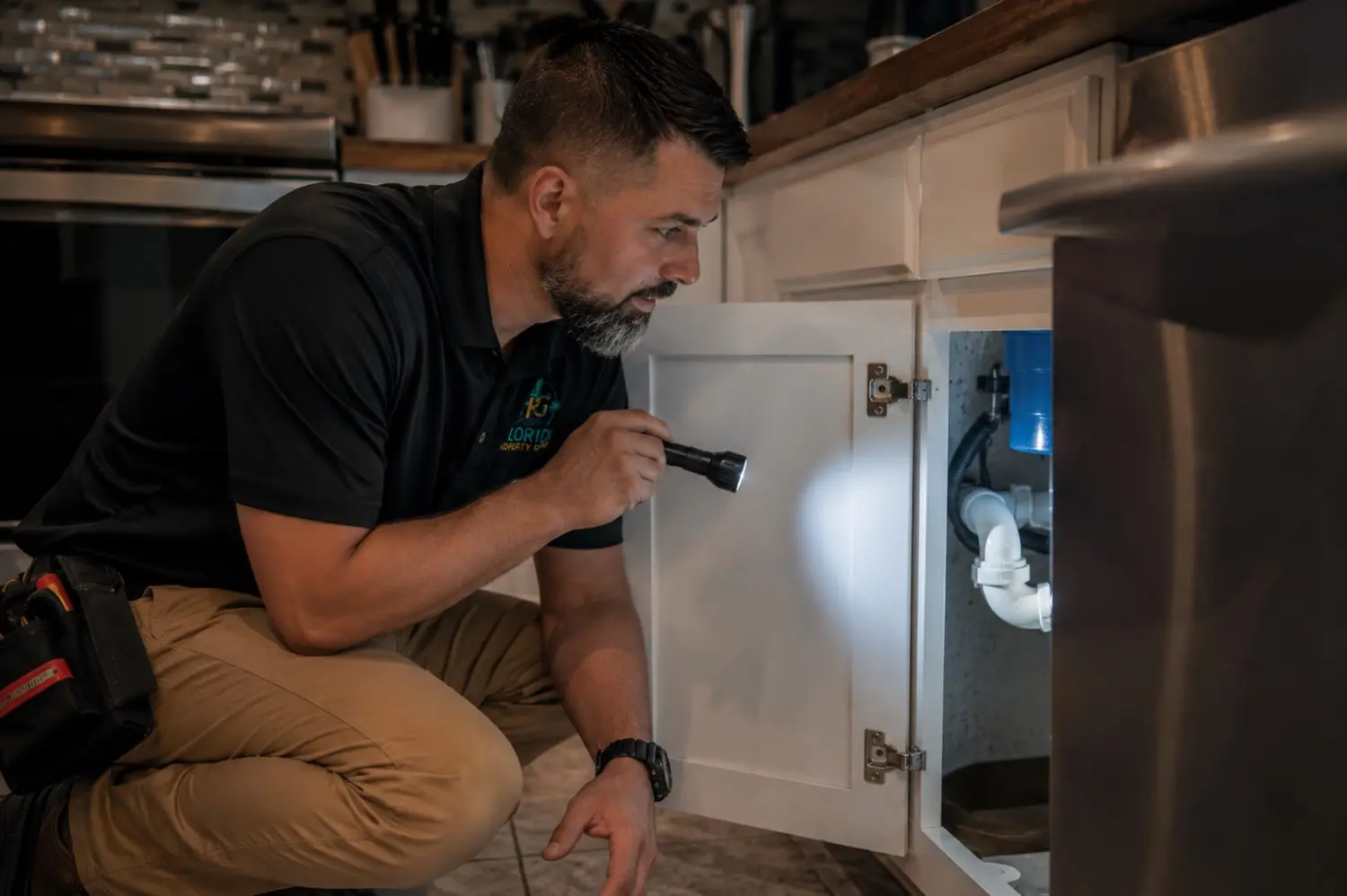
Condos are the new hot sellers in the real estate marketplace. So much so that Palm Beach realtors are reporting a 5% increase in condo sales in 2023 alone. 

In fact, be it a first-time buyer or a multiple-property owner, condos are preferred by everyone. 

And this is for obvious reasons, as from increased affordability to lower maintenance to a convenient location to a sense of community, condos have it all. 

But a million-dollar question that all buyers have on their minds is, ‘Do I need to conduct a condo home inspection?’

After all, homeowners’ associations also have their share of obligation for inspections, and they charge you for it through maintenance charges. 

Simply put, you’ll need to conduct a home inspection for condo interiors, as it’s not the HOA’s responsibility. Also, before you buy a condo, it’s a wise move to get it inspected in order to safeguard your investment. 

Wondering what’s more to condo inspections?

Well. I’ve compiled a thorough inspection guide for condo buyers, answering all the questions that you might have, along with my insider tips for a sound investment. 

So let’s dive right in and have a look up close. 

What is a condo home inspection? 

Before we get into the details of condo inspections, it’s essential you understand what a home inspection for a condominium exactly is. 

For starters, a condo inspection is similar to a single-family home inspection, where a licensed inspector examines various aspects of the home building. This includes walls, ceilings, plumbing lines, electrical systems, HVACs, and more. 

The idea is to gain a thorough understanding of your building’s critical systems and detect any potential problems that might be lurking. 

However, unlike a conventional home inspection, condo inspections examine only those areas that are within the walls of your unit. That’s because the HOA is responsible for inspecting all other things that lie outside your condo unit’s walls. 

For instance, while it is your responsibility to get the interiors of your condo assessed, the structural systems, building foundation, exterior walls, etc., are inspected at the HOA’s expense. 

Do you need a home inspection for condo units before buying? 

A home inspection isn’t required before purchasing a condo unit. Nevertheless, I always suggest homebuyers get a complete inspection as it will ensure they’re investing in the right property. 

You see, the fact that homeowners’ associations cover a large portion of inspection requirements makes buyers assume that they don’t need a pre-purchase assessment.

Moreover, the seller or existing owner might even offer you a lucrative deal in return for not utilizing an inspection contingency clause. 

But it is in your best interest not to fall for such assumptions and offers and get the condo inspected. That’s because even though the HOA ensures periodic exterior inspections and repairs, the interior condo walls can still have some major problems. 

For instance, a lot of condominium units that I’ve inspected looked in tip-top shape from the outside but had significant issues such as faulty electrical wirings, mold-affected walls, etc. 

As such, a third-party condominium home inspection can go a long way in helping you purchase the right home. 

Condo Inspection for Housing Loan

 Looking to finance your new condo?
If yes, you might well need a complete condominium inspection before the lenders approve your loan application. And that’s especially true for government-sponsored programs such as FHA loans. 

To learn more, you can go through our blog – Do Lenders Require A Home Inspection?  

What do home inspectors look for during a condominium inspection? 

As we discussed earlier, a condominium inspection looks at every aspect of your condo unit’s inner walls. This includes everything from walls to flooring to ceiling to fire safety systems and more.  

Now, there are two types of condo inspections that both condo buyers and existing owners can get, namely interior only and full inspections. And the areas that the inspector will assess will depend on the type of inspection that you opt for. 

Here’s what both condo home inspections cover: 

#1. Interior-only condo inspection 

Like the name suggests, an interior-only inspection looks at all things within the walls of your condo unit. 

For instance, while conducting an interior-only condo inspection, I closely examine the build quality and existing condition of walls, the functionality of HVACs, plumbing conditions, etc., to name a few. 

Herein, my goal is to give you a complete picture of the condo’s existing condition from the inside, including defects and maintenance requirements. 

Condo interior

In all, here’s a complete list of items that an interior-only condo inspection examines: 

  • Interior wall examination for signs of cracks or damage. 
  • Complete plumbing inspection to detect water flow issues and water-induced damage. 
  • Functioning of fire safety systems, including smoke and fire alarms. 
  • Close-up analysis of doors, windows, ceiling, and flooring. 
  • Assessment of the overall HVAC system (including those that extend outside the inner walls). 
  • Electrical system analysis for proper functionality and safety compliance. 
  • Inspection of household appliances such as water heaters, furnaces, etc. 
  • Detection of potential damage to the patio. 
  • An evaluation of the quality of previous repairs. 

#2. Full condo inspection 

A full condo inspection includes everything that an interior-only assessment covers, plus an inspection of certain areas outside the condo unit. This includes shared spaces in the building and the areas attached to your unit. 

For instance, I include the following areas in my inspection plan while conducting a full condo inspection: 

  • Basements, parking areas, and other shared areas, especially if they’re close to your condo unit. 
  • The crawl space and attic attached to the unit to ensure there are no visible defects and a firewall is installed. 

Pro tip: A full home inspection for condo is worth every penny

Full inspections for condominiums are slightly more expensive than interior-only inspections. But when it comes to making a sound investment, the former is totally worth the cost. 

Wondering why? 

Well, firstly, a full inspection along with relevant HOA documentation will provide you with a clear understanding of the condo building’s overall condition. This will, in turn, allow you to decide whether or not you should purchase a condo unit in that building. 

Second, even though inspecting exterior spaces is the HOA’s responsibility, it’s the condo unit owners who foot the bills in the form of maintenance and reserve costs. This means the more potential issues there are in the building, the higher your regular maintenance charges will be. 

What is a condo home inspection checklist? 

A condominium inspection checklist is a list of all the areas that you should get inspected before purchasing a unit. 

You see, although inspections cover all the critical aspects of condo homes, even the most seasoned inspector can make human errors and miss certain areas. So, by having an inspection checklist handy, you can ensure that everything that’s important gets inspected and nothing is left to chance. 

Curious as to what a condominium inspection checklist looks like? 

Here’s a checklist that I keep with myself while inspecting condo units: 

  • Walls, floors, and ceiling
  • Doors and windows 
  • Water pressure and overall plumbing 
  • Electrical systems 
  • Fire systems 
  • HVAC systems 
  • Caulking in wet spaces, including bathroom and kitchen 
  • Attic and crawl spaces 

How much does a home inspection for condominium units cost? 

The cost of home inspection for condo units, on average, ranges between $250 and $350.

However, the actual amount that you might end up paying for one such inspection will vary significantly. That’s because the cost of condo inspection is determined by a range of factors, including the property’s location, unit size, inspection type, date of last inspection, and more. 

For instance, a medium-sized condo inspection in Bradenton will cost you on the lower end of the average. But you can expect to pay upward of $350 to get a similar condo inspected in Miami-Dade County. 

What else should you do apart from condo home inspection? 

When it comes to making the right investment decisions, a complete condominium inspection is only one step in the right direction. That’s because although these inspections provide thorough insights into the condition of the condo unit, there’s still a lot that you need to know about the overall condition of the building. 

Here’s some essential information that you should seek from the HOA and analyze before purchasing a condo unit: 

#1. HOA or condo reserve study report 

The latest Florida state laws for condo associations require HOAs to conduct a structural integrity reserve study. This involves an exterior inspection of the areas that the HOA is responsible for maintaining, as well as the reserve funds that the association has for such maintenance. 

By analyzing the reserve study report, you’ll gain a detailed idea about the condition of the building and the amount of funds the HOA has for essential repairs. Also, this will allow you to estimate the maintenance expenses that you can expect to pay as a homeowner. 

For instance, if an HOA is low on reserve funds, but the building calls for extensive repairs, you should be prepared to foot larger maintenance bills. 

#2. Take into account the HOA’s funding 

Some HOAs might advertise low maintenance charges as their major selling points. But as lucrative as it seems, it can also be a red flag, especially if the association is low on critical reserve funds.  

That’s because HOA needs sufficient funds to meet its inspection and maintenance obligations. And if they’re low on funds and still collecting minimal maintenance charges, it’s a sign that you’re investing in a huge liability. 

#3. Important condo documents 

Apart from the reserve study report and finances, you should also ask for HOA documents, such as the minutes of previous association meetings. 

Important building issues, such as existing problems or defects, maintenance requirements, etc., are accessed by HOA members during these meetings. So, by assessing the minutes, you can get to know about all such issues as well as potential red flags. 

Furthermore, you can ask the HOA for proof of such problems being resolved before buying a condo unit.

Wondering what are the signs that you should not buy a condo home? 

You can read our blog – When To Walk Away After Home Inspection

Get a Thorough Home Inspection Plan and an Estimated Project Cost for Free!

Conclusion 

As you can see, a condo home inspection is a prerequisite before you purchase a unit despite being non-mandatory. After all, from ensuring that you’re buying the right condo unit to guaranteeing your overall safety and well-being, condo inspections go a long way in protecting your interests. 

Not to mention, an experienced condominium inspector can also walk you through the possible future risks, even if the condo unit and the building are in good shape. 

Looking for one such pre-purchase condominium inspection? 

You can get in touch with us!

At Florida Property Group, we’re Florida’s seasoned condo inspection experts with over a decade of expertise under our belt. And we go over and above regular inspections to walk you through the property’s existing conditions. 


Condo Inspections in Sarasota and Nearby Communities

Florida Property Group performs condo and villa inspections throughout Sarasota, Bradenton and Venice. The inspection scope depends on which components belong to the unit owner versus the association, but we evaluate the readily accessible systems and components within the agreed inspection scope and explain the findings clearly.

See what to expect during a home inspection or schedule your condo inspection online.

Nate Standifer

Nate Standifer

Nate Standifer is co-founder of Florida Property Group and a Florida-licensed home inspector with 15+ years of experience across telecommunications, low-voltage electrical inspections, and residential property inspections. An InterNACHI Certified Professional Inspector®, he and the Florida Property Group team complete approximately 1,500 inspections annually across Bradenton, Sarasota, Lakewood Ranch, and surrounding Southwest Florida communities.

InterNACHI Certified • RASM Member • SUPRA Access